


Short answer: take the DELE if you need Spanish certification for official paperwork, citizenship, residency, or any credential that has to last forever. Take the SIELE if you need fast, flexible proof of your level: you book it almost any day of the year, sit it on a computer, and results arrive in about three weeks. The DELE is pass/fail at a level you choose in advance; the SIELE gives every candidate a score from 0 to 1000, so you cannot technically fail it.
At Vamos Academy we run DELE and SIELE preparation at our school in Málaga, and we also teach Spanish at our school in Buenos Aires, so “which one?” is a question our team hears constantly. The honest answer depends on why you need the certificate, not which exam is “better”. Here is the full breakdown.
In this article
What is the difference between the SIELE and the DELE?
Both are official certifications backed by the Instituto Cervantes, but they were built for different purposes.
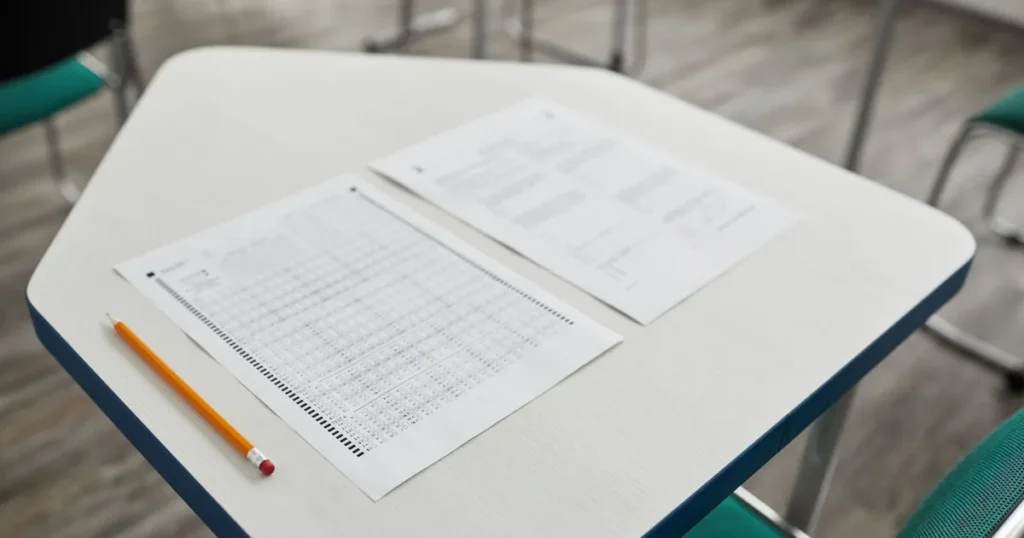
The DELE (Diploma de Español como Lengua Extranjera) is the classic diploma. You register for one specific CEFR level (A1, A2, B1, B2, C1 or C2), and you either pass that level or you don’t. It is mostly paper-based, sat on fixed dates worldwide, and the diploma never expires.
The SIELE (Servicio Internacional de Evaluación de la Lengua Española) is the modern, multilevel alternative. It was created jointly by the Instituto Cervantes, the Universidad Nacional Autónoma de México, the Universidad de Salamanca and the Universidad de Buenos Aires: a detail our Buenos Aires students like, since one of the exam’s four founding institutions is right in their city. It is entirely computer-based, bookable year-round, and instead of pass/fail it places you on a scale of 0-1000 that maps to CEFR levels A1 through C1. The certificate is valid for five years.
| DELE | SIELE | |
|---|---|---|
| Run by | Instituto Cervantes | Instituto Cervantes + UNAM + U. de Salamanca + U. de Buenos Aires |
| Format | Mostly paper-based, in-person oral interview | 100% computer-based, recorded speaking tasks |
| Levels | You pick one: A1-C2 | Multilevel score 0-1000, mapped to A1-C1 |
| Result | Pass or fail | Score report, no fail |
| Validity | Lifetime | 5 years |
| Exam dates | Fixed sessions (7 in 2026) | Year-round, on demand |
| Results in | Roughly 2-3 months | About 3 weeks |
| Spanish citizenship | Yes (A2 or higher) | Not accepted |
Which exam counts for Spanish citizenship and residency?
This is the deciding factor for many people planning a long-term move to Spain, so let’s settle it first: for Spanish nationality, only the DELE (A2 or higher) is accepted: the SIELE is not.
Spain’s nationality process requires non-native applicants to pass the DELE at A2 level or above, alongside the CCSE culture and constitution test, both administered by the Instituto Cervantes. An A2 certificate from an Escuela Oficial de Idiomas is also accepted as an alternative, and nationals of countries where Spanish is an official language (the Ibero-American countries plus Equatorial Guinea) are exempt from the DELE requirement, although even they must still sit the CCSE test (rules current as of 2026; confirm how they apply to your nationality with the Instituto Cervantes or an immigration lawyer). A SIELE score, even a brilliant one, does not appear anywhere in that process.
If you are settling in Spain long-term, the language exam is only one piece of the paperwork puzzle; our step-by-step guide on how to obtain your NIE in Spain covers the identification number you’ll need before almost any official procedure.
One practical warning for anyone sitting the exam in Andalusia: DELE registration closes well before exam day (for the February 2026 session, enrolment closed more than five weeks in advance), and seats at popular Andalusian exam centres fill up. If your residency or nationality timeline depends on a DELE result, work backwards from the exam calendar, then add the two-to-three-month wait for results. Students regularly underestimate this and lose half a year.
How are the SIELE and DELE scored?
The scoring systems are where the two exams feel most different in practice.
DELE: the exam is split into two groups: Group 1 covers reading and writing, Group 2 covers listening and speaking. Each group is scored out of 50, and at levels A1 to C1 you need at least 30 points in each group to pass. (DELE C2 is the exception: it is structured as three integrated tests, and you must pass all three.) That structure matters: a strong essay cannot rescue a weak oral interview, because they sit in different groups. It’s worth building your DELE preparation around whichever group is your weaker side for exactly this reason.
SIELE: each of the four modules (reading, listening, writing, speaking) is worth up to 250 points, for a maximum of 1000. Your total and per-module scores are mapped to CEFR levels on your certificate. There is no pass mark. If you have an off day, your certificate simply shows a lower level, and you can retake it whenever you like.
Two facts worth memorising: you cannot fail the SIELE, but the SIELE cannot certify C2. Its scale tops out at C1. If you need documented mastery at the highest level, the DELE C2 is the only route between these two exams.
Not sure which exam or level fits your situation? Talk to our team about our small-group DELE and SIELE preparation courses in Málaga (group courses from €200 per week, private classes from €30 per hour), and get honest advice before you book anything.
When can you take each exam, and how fast are the results?
The DELE runs on a fixed worldwide calendar. In 2026 the Instituto Cervantes scheduled seven sessions (February, April, May, July, September, October and November), and not every level is offered at every session, so check your level’s dates before planning anything. Results officially take around two to three months to arrive.
The SIELE is the opposite: you choose a date at an accredited centre almost year-round, in some cases sitting the exam within 48 hours of booking, and results are issued in roughly three weeks. The complete SIELE Global takes about three hours in a single computer-based sitting.
Put simply: SIELE results arrive in about three weeks; DELE results can take up to three months. If a university application deadline is eight weeks away, that single fact usually makes the decision for you.
Which exam should you take for university or work?
For university admission, both certificates are widely recognised: Spanish universities generally accept either, and the SIELE’s academic backing (four major universities across Spain and Latin America) means it is well established in Latin American admissions too. That said, always confirm with the specific institution before booking, because some programmes name one exam explicitly or require a minimum level in every individual skill.
For your CV, think about time horizons. A DELE diploma is a one-time investment that stays valid for the rest of your career. A SIELE certificate expires after five years, which employers actually tend to like, since it proves your Spanish is current rather than a relic of a semester abroad a decade ago. Frequent job-changers in international companies often keep a recent SIELE score on file precisely because it is quick to renew.
If you’re learning Spanish in Buenos Aires, where we also have a school, the SIELE’s UBA connection and on-demand dates make it a natural fit for travellers who don’t know how long they’re staying. If that’s you, there are plenty of low-stakes ways to gauge your progress first, here are our favourite ways to put your Spanish skills to the test in Buenos Aires before you pay for an official exam.
SPANISH COURSES
Get course dates & prices
Real reply from our team, usually same day. No spam.

TripAdvisor Travelers' Choice winner
MálagaBuenos Aires
Written by Raquel CobosSchool Manager, Vamos Academy
Is the SIELE easier than the DELE?
No: the content difficulty is comparable, because both are calibrated to the same CEFR framework. What differs is the risk profile.
- With the DELE you can lose everything. Choose B2, have a bad listening day, score 28/50 in Group 2, and you walk away with nothing, no certificate at any level, and a wait for the next session to try again.
- With the SIELE you always walk away with a result. The worst case is a certificate showing a lower level than you hoped for.
- The speaking format divides people. The DELE includes a face-to-face interview with a human examiner; the SIELE has you speaking into a microphone against a timer. Some candidates relax with a real person in front of them and others freeze. It’s worth trying a timed practice task in both formats before you choose.
- Accents: the SIELE is deliberately pan-Hispanic, so its listening tasks mix varieties of Spanish from Spain and Latin America. DELE listening also includes different accents. Whichever exam you pick, training your ear on only one variety is a mistake.
How should you prepare for either exam?
General fluency and exam performance are related but not identical skills. The students who underperform are almost never the weakest speakers. They’re the ones who never practised the exam’s specific task types under time pressure. Whatever your route, build your preparation around three things:
- Timed mock exams using official past papers or the official online practice materials, from week one, not as a final dress rehearsal.
- The writing genres your level demands (formal letters, complaints, opinion essays). DELE examiners grade against specific task-fulfilment criteria, not just grammar.
- Recorded speaking practice. Listening back to yourself is uncomfortable and works. For SIELE candidates it also simulates the microphone format exactly.
If you’re starting further back and the exam is a longer-term goal, begin with our guide on going from beginner to fluency in Spanish and layer the exam-specific training on once you’re within one level of your target.
Frequently asked questions
Is the SIELE accepted for Spanish citizenship?
No. Spanish nationality applications require the DELE at A2 level or higher (or an equivalent Escuela Oficial de Idiomas certificate), plus the CCSE test. The SIELE is not accepted for citizenship or residency purposes.
Does the DELE certificate expire?
No: a DELE diploma is valid for life. The SIELE certificate, by contrast, is valid for five years from the exam date.
Which exam gives results faster, SIELE or DELE?
The SIELE, by a wide margin: results arrive in about three weeks, versus roughly two to three months for the DELE.
Can you fail the SIELE?
No. The SIELE has no pass mark, every candidate receives a score from 0 to 1000 mapped to a CEFR level. The DELE is pass/fail: you need at least 30/50 in each of its two skill groups (levels A1-C1; the C2 exam instead has three integrated tests, all of which must be passed).
Does the SIELE certify level C2?
No. The SIELE scale reaches C1 at most. If you need an official C2 certificate, the DELE C2 is the option to take.
Can I take the DELE or SIELE in Buenos Aires or Málaga?
Yes: both exams are offered through accredited centres in both cities, and the Universidad de Buenos Aires is one of the SIELE’s four founding institutions. In Málaga, for example, the Universidad de Málaga’s Centro Internacional de Español is accredited for both DELE and SIELE, and Buenos Aires has several accredited DELE centres plus SIELE sittings: the UBA itself is a SIELE founding partner. Check each exam’s official centre finder (examenes.cervantes.es for the DELE, siele.org for the SIELE) for 2026 locations and dates.
Ready to start preparing? Vamos Academy runs small-group Spanish courses in Málaga and Buenos Aires, with dedicated DELE and SIELE preparation at our Málaga school. Talk to our team for course details and honest advice on which certificate your situation actually requires, then register when you’re ready.
Comparing all four Spanish certificates, including CELU and the OPI? See Spanish certifications compared.
Test yourself
Quick quiz
Quick quiz: SIELE or DELE
0 of 5 answered