





Quick answer
To get a NIE in Spain, book a cita previa at an Oficina de Extranjería, at a designated national police station, or at your Spanish consulate. Bring form EX-15, your passport plus a photocopy, documentation of the economic, professional or social reason you need the number, and the paid tasa modelo 790 código 012.
To get a NIE in Spain you need four things: an appointment (cita previa) at an Oficina de Extranjería, at a national police station with a foreigners’ desk, or at the Spanish consulate that covers your home address; a completed form EX-15; your passport plus a photocopy; and documentation of the economic, professional or social reason you need the number. You also pay the tasa modelo 790 código 012 before you go. Below is the full document list, what the fee runs to, the difference between a NIE and a TIE, and the mistakes that send people home without a number.
In this article
What is a NIE, and who needs one in Spain?
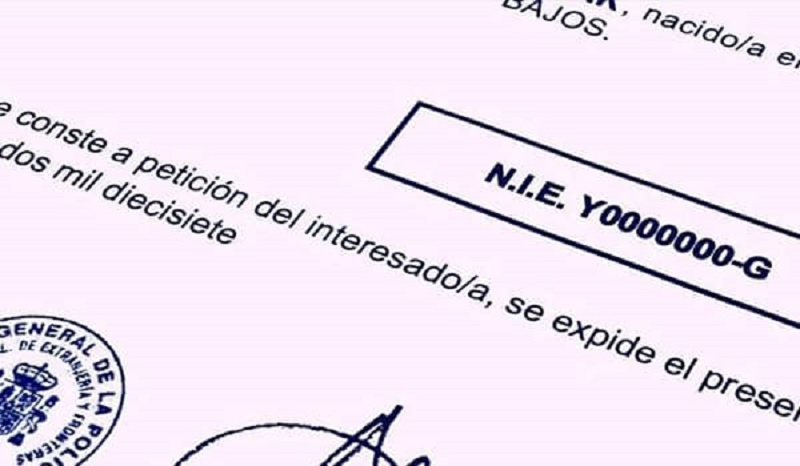
The NIE is the Número de Identidad de Extranjero, the personal identification number Spain assigns to every foreigner who has dealings here of an economic, professional or social nature. It is unique, personal and permanent: you are issued one number and it stays with you for life, even if you leave Spain for a decade and come back.
Two things it is not. It is not a residence permit, and it is not a card. The NIE is issued on an A4 certificate, and the number itself is a letter, seven digits and a check letter, in the format X-1234567-A. Newer numbers start with Y or Z.
You will be asked for a NIE if you plan to do any of the following:
- Buy, sell or inherit property, or register a purchase in the Registro de la Propiedad
- Open a Spanish bank account or take out a Spanish mortgage
- Sign an employment contract, register as autónomo, or set up a company
- Pay Spanish tax of any kind, including non-resident property tax
- Buy a car, register a vehicle, or take out Spanish insurance
- Sign a long-term rental contract or put utilities in your own name
- Enrol in a long course of study, or apply for a residence card as a non-EU student
Coming for a short Spanish course and paying as you go? You almost certainly do not need one. If money, property or a contract is involved, you do.
How do you get a NIE in Spain, step by step?
The sequence matters more than most guides admit, because two of the steps have to happen before you can book the appointment.
- Decide where you are applying. Inside Spain, that is the Oficina de Extranjería or a designated national police station in the province where you are. Outside Spain, it is the Spanish consulate covering your place of residence, not the one nearest to where you plan to buy.
- Fill in form EX-15. This is the official application for the NIE and related certificates. Complete it in Spanish, in block capitals, and sign it. Bring two copies, since one is stamped and returned to you.
- Generate and pay the tasa modelo 790 código 012. You fill the form in online, print it, and pay it at a Spanish bank. Keep the stamped proof of payment, because an unpaid or unstamped tasa is the single most common reason an appointment fails.
- Book the cita previa. Appointments are booked through the official electronic appointment system for the province, or directly with the consulate if you are applying from abroad. Availability varies enormously by province and season, so treat it as the step that sets your timeline rather than an afterthought.
- Attend with originals and copies of everything. Officers keep the copies and check them against the originals. If a document is in another language it will normally need a sworn translation, and foreign public documents usually need an apostille.
- Collect the certificate. Some offices hand the resolution over at the appointment, others ask you to return or send it on. Ask at the desk exactly how yours will reach you, and photograph the certificate before you leave the building.
Málaga runs its own appointment system with its own quirks, and our team on the ground there wrote a separate walkthrough on getting your NIE in Málaga specifically, including which office handles which case.
SPANISH COURSES
Get course dates & prices
Real reply from our team, usually same day. No spam.

What documents do you need for a NIE in Spain?
This is the checklist officers actually work from. Bring the original and a photocopy of every item.
| Document | What it has to show |
|---|---|
| Form EX-15 | Completed and signed, in Spanish. Bring two copies so one can be stamped and returned to you. |
| Passport | Valid, not expiring during the process, plus a photocopy of the photo page. Some offices ask for a copy of the entry stamp or visa page as well. |
| Proof of your reason for applying | The part people underestimate. A signed purchase agreement or nota simple for property, a job offer or contract for work, an acceptance letter for study, a notary appointment, an inheritance document. A verbal explanation is not enough. |
| Tasa modelo 790 código 012 | Paid and stamped by the bank, or with proof of online payment. Bring the paper, not a photo of it. |
| Passport photograph | Not required everywhere, but some offices and consulates ask for one. Carrying a recent photo costs nothing. |
| Power of attorney | Only if someone applies for you. It must be notarised, and if signed outside Spain, apostilled and translated by a sworn translator. |
| Sworn translations and apostilles | Foreign public documents generally need an apostille from the issuing country and a translation by a traductor jurado registered in Spain. |
Put the copies behind their originals in the order above. Appointments are short and officers work through the file in sequence.
How much does a NIE cost, and how do you pay the tasa?
The government fee is small. The tasa modelo 790 código 012 for assignment of a NIE has sat in the region of €10 to €17 in recent years, and it is revised periodically, so check the current fee on the official tasa page before you pay rather than trusting any figure you read in a blog, including this one.
Inside Spain you complete the 790 form online, print it, and pay at the counter or ATM of almost any Spanish bank. The stamped copy is what the officer wants to see.
Consulates work differently: they charge their own fee, usually in local currency, and the amounts differ from the Spanish tasa. Check your consulate’s published fee schedule.
Beyond the official fee, the only real cost is help. A gestor or lawyer handling the application typically charges a few hundred euros, which buys you the paperwork being right first time. That is optional, not a requirement.
Can you apply for a NIE from outside Spain?
Yes, and for many people it is the calmer route. There are two options.
At the Spanish consulate for your area. You submit the EX-15, passport, proof of the reason, and pay the consular fee. This is the standard route for property buyers who want the number in hand before they travel to sign at the notary.
Through a representative in Spain. You sign a power of attorney in front of a notary at home, have it apostilled and translated by a sworn translator, and your gestor, lawyer or estate agent applies on your behalf. You never set foot in the extranjería office.
Whichever route you use, apply well before the date you actually need the number. Property completions and job starts do not move because an appointment slot did not appear.
NIE, TIE or EU registration certificate: which one do you actually need?
These get mixed up constantly, and applying for the wrong one wastes an appointment.
- NIE. The number itself, issued on a white A4 certificate. It identifies you for tax, property and contracts. It says nothing about your right to stay.
- Certificado de registro de ciudadano de la Unión. For EU, EEA and Swiss citizens staying more than three months. It is a small green certificate or card, and it carries your NIE, so EU citizens registering as residents do not apply for a separate NIE first.
- TIE. The Tarjeta de Identidad de Extranjero, a physical card with your photo, issued to non-EU nationals who hold a residence or study authorisation. It also carries your NIE. Non-EU students on a visa longer than 180 days apply for a TIE after arriving in Spain.
The rule of thumb: if you are simply doing business in Spain, you need the NIE. If you are moving here, the number comes bundled with the residence document, and the paperwork you should be reading is the Spain student visa requirements guide if you are coming to study, or the residence route that matches your situation if you are not.
What goes wrong most often with NIE applications?
Nearly every failed appointment we hear about comes down to one of these:
- The wrong form. EX-15 is for the NIE and certificates. EX-18 is for EU registration. They are not interchangeable.
- The tasa unpaid or unstamped. The fee must be paid before the appointment, and the proof must be on paper.
- No evidence of the reason. “I might buy a house one day” is not a reason. Bring the contract, offer letter, or notary appointment.
- Missing photocopies. Offices keep copies. They do not photocopy for you.
- Foreign documents without an apostille or sworn translation. The document is refused on the spot and you rebook.
- Assuming the NIE grants residency. It does not, and building a plan around that assumption is expensive.
One more: check the number on the certificate before you leave. Transcription errors happen, and fixing one later is far more work than pointing at it at the desk.
Frequently asked questions
Is a NIE the same as residency in Spain?
No. The NIE is an identification number for tax, property and contractual purposes. Residency is a separate legal status granted through a visa, an EU registration certificate or a residence authorisation. Holding a NIE gives you no right to live in Spain.
Can I work in Spain with just a NIE?
No. A NIE lets an employer or the tax office identify you, but you also need authorisation to work: EU citizenship, a work visa, or a residence permit that includes work rights. Employers ask for both.
What do I do if I lose my NIE certificate?
The number is permanent, so you do not reapply for a new one. You request a certificate confirming your existing NIE from the extranjería office or police station, again using form EX-15 and paying the tasa. Keeping a scan and a photograph of the original saves you the trip.
How is a NIE different from a NIF and a DNI?
The DNI is the national identity number and card for Spanish citizens. The NIF is the general tax identification number: for Spanish citizens it is the DNI number, and for foreigners it is the NIE. So when a Spanish form asks for your NIF, a foreigner writes their NIE.
The paperwork is easier in Spanish, and so is the appointment. Vamos Academy teaches Spanish in small groups at our schools in Málaga and Buenos Aires, from complete beginner upwards, with teachers who have walked plenty of students through Spanish bureaucracy. If you are moving to Spain, arriving with usable Spanish changes every one of these conversations.
Rules, fees and appointment systems change. Confirm the current fee, form version and procedure with the Oficina de Extranjería or Spanish consulate handling your case before you apply.