Non-Lucrative Visa Spain 2026: Requirements & Cost
Live in Spain on savings, a pension, or investment income, without working locally. Here is the full 2026 income table, document checklist, timeline, renewal rules, and our fixed legal fee, from a Malaga-based abogada colegiada.
- Abogada colegiada
- Since 2009
- English + Spanish
- Malaga office
Retiring or relocating without a job?
We check your eligibility, build your document file, file with your consulate, and carry you through to your TIE card in Malaga, for one fixed fee.
Free 10-min callThe Non-Lucrative Visa lets you live in Spain without working, if you can show recurring income or savings of about 28,800 EUR for the main applicant in 2026, plus about 7,200 EUR per additional family member. It is applied for at the Spanish consulate covering your home address, takes roughly four to eight months from paperwork to TIE card, and does not permit local employment. Our fixed fee is 950 EUR for the main applicant plus 250 EUR per family member.
What the Non-Lucrative Visa is, and who it fits
The Non-Lucrative Visa, known as the NLV or visado de residencia no lucrativa, is Spain’s route for people who want to live in the country without working here. It is not a retirement visa in name, but in practice it is the main door retirees use, alongside savings-based movers, remote retirees living off investment income, and anyone who can support themselves without touching the Spanish labour market. The trade-off is exactly what the name says: no local work, in exchange for a straightforward path to legal residency built entirely around proof of financial means.
It fits three groups particularly well. First, retirees drawing a pension, whether state, private, or a mix, who want to spend their retirement years on the Mediterranean without any intention of working. Second, people living off savings, rental income back home, dividends, or investment portfolios, who do not need a Spanish income and do not want the added compliance of a work-based visa. Third, financially independent spouses or partners joining a family member already settled in Spain under a different permit, where the NLV lets them reside without a separate work authorization.
It does not fit remote employees or freelancers whose main income comes from active work for a foreign company or clients. That situation now has its own route, the digital nomad visa, and applying for the NLV instead when your real income is a salary or invoicing clients is one of the more common and avoidable refusal triggers we see.
Rule of thumb: if your money keeps coming in whether or not you lift a finger, the NLV is usually the right visa. If you need to keep working to keep the money coming, look at the digital nomad visa instead.
It is also worth being clear about who the NLV does not fit well. If you are early in your career and expect your income to depend on active client work or a job search once you arrive, the no-work restriction will frustrate you quickly. If your only funds are a single lump sum with no clear pattern of recurring availability, a consulate may ask hard questions about what happens once that sum is spent, since the visa is meant to demonstrate sustainable means, not a one-off transfer timed to the application. And if you are hoping to combine Spanish residency with active local self-employment from day one, the NLV is the wrong starting point; look instead at the self-employed visa or, once you are settled, arraigo routes after enough time in the country.
2026 income requirements, with the IPREM math shown
The NLV income test is built on the IPREM, the Indicador Publico de Renta de Efectos Multiples, a public income index Spain uses to set thresholds across many programs, immigration included. The main applicant must show 400% of the annual IPREM, and each additional family member must show 100% of the annual IPREM. Renewal after the first year covers a two-year period, so the figures roughly double.
| Applicant | Requirement | Approx. 2026 annual figure | Approx. monthly equivalent |
|---|---|---|---|
| Main applicant | 400% of annual IPREM | €28,800 | €2,400/month |
| Each additional family member | 100% of annual IPREM | €7,200 | €600/month |
| First renewal (main applicant, 2 years) | Double the first-year figure | €57,600 | €2,400/month average |
| First renewal (per family member, 2 years) | Double the first-year figure | €14,400 | €600/month average |
In plain terms, the math is 12 months of IPREM at the required percentage. At an annual IPREM base of roughly €7,200 (about €600/month), 400% gets you to €28,800 for the main applicant, and 100% gets you to €7,200 per dependent. A couple applying together, main applicant plus spouse, should budget for roughly €36,000 in demonstrable annual means for the first year, and around €72,000 across the first two-year renewal.
Consulates accept savings, pensions, rental income, dividends, or a combination, as long as it is recurring or verifiably available and properly documented with bank statements, pension award letters, or investment account statements covering the last 6 to 12 months. Self-certified or undocumented net worth claims are not enough.
Full document checklist
Every consulate adds small local variations, but the core NLV file looks like this:
- Valid passport with at least one year of remaining validity and at least one blank page
- Completed national visa application form (EX-01), signed
- Proof of financial means: bank statements, pension letters, or investment statements for the last 6 to 12 months, meeting the IPREM thresholds above
- Private health insurance policy with full coverage in Spain, no copayments, and no waiting periods
- Criminal record certificate from every country you have lived in for the last 5 years, apostilled and officially translated into Spanish
- Medical certificate confirming you do not carry any disease with serious public health implications under the International Health Regulations, on the format your consulate requires
- Passport-sized photographs meeting Spanish visa specifications
- Proof of accommodation in Spain, required by some consulates and optional at others
- Visa application fee payment receipt
- For accompanying family members: marriage certificate, birth certificates, or equivalent, apostilled and translated, plus their own proof of means and health insurance
Apostille and sworn translation timing is the single biggest self-inflicted delay we see. Criminal record certificates typically have a short validity window, often 90 days, so if translation and apostille take six weeks, you can end up racing the clock. We sequence this for you so nothing expires before the consulate sees it.

Step-by-step process and realistic timeline
Stage 1: the consulate
The application starts abroad, at the Spanish consulate with jurisdiction over your current place of legal residence, not a consulate of your choosing. Document preparation, including apostilles and sworn translations, typically takes 3 to 6 weeks once everything is in motion. Appointment availability varies enormously by consulate, from a couple of weeks to a couple of months in busier jurisdictions. Once the file is submitted, the standard maximum processing time is around 3 months, though several consulates decide faster in practice.
Stage 2: arrival and the TIE card
Once your visa is issued and stamped in your passport, you generally have 90 days to enter Spain. Entry with the visa grants an initial stay, during which you must apply for your TIE card, the physical foreigner ID card, at the Oficina de Extranjeros or comisaria covering your Spanish address, normally within 30 days of arrival. Appointment (cita previa) availability and fingerprinting-to-card turnaround add another 4 to 8 weeks in most provinces, Malaga included.
All in, a realistic total timeline from the day you start gathering documents to the day you are holding a physical TIE card is 4 to 8 months. Rushing rarely helps; sequencing correctly does.
Renewal rules and absence limits
The initial NLV is granted for one year. The first renewal extends it for two years, and the second renewal extends it for a further two years, bringing you to five years of continuous legal residence, the point at which you can apply for permanent (larga duracion) residency.
Each renewal requires refreshed proof of means at the thresholds shown in the table above, roughly double the annual figure because the permit now covers two years rather than one. Renewals also require evidence that you have genuinely been living in Spain.
As a general rule for temporary residence permits, absences of more than 6 months in a single 12-month period, or excessive cumulative absence across the permit period, put a renewal at risk. If your circumstances mean you will be away from Spain for extended stretches, tell us before the renewal file goes in so we can document the exception properly rather than after a refusal.
Can you work on the Non-Lucrative Visa?
The honest, current 2026 answer: no, not in the way most applicants hope. The NLV remains legally a no-work permit for activity carried out in Spain, for a Spanish employer, or as a Spanish autonomo. What has changed is remote work for a foreign company. Since a 2023 reform, NLV holders can undertake limited remote work for a non-Spanish employer or clients, as long as that income stays a minor share of total professional income overall, rather than being the main source of your livelihood. This is a narrow allowance, not a licence to work full time remotely from Spain on an NLV.
If remote work for foreign clients or an employer is genuinely how you plan to support yourself, the digital nomad visa is built for exactly that, with its own income threshold and, for many applicants, a beneficial tax option. Here is the difference side by side:
| Non-Lucrative Visa | Digital Nomad Visa | |
|---|---|---|
| Who it is for | Retirees, savings-based movers, non-working spouses | Remote employees and freelancers working for foreign clients |
| Can you work? | No local work; only minor, incidental foreign remote work | Yes, remote work for non-Spanish employers or clients is the whole point |
| Main income test | Savings, pension, or investment income (IPREM based) | Verified remote work income (higher fixed monthly threshold) |
| Tax option | Standard progressive tax once resident; Beckham Law not applicable | Beckham-style flat rate may apply if eligible |
| Best fit | You do not need to work to live on this income | Your income depends on continuing to work remotely |
See our Digital Nomad Visa Spain 2026 guide if that comparison sounds closer to your situation.
Tax consequences once you pass 183 days
Immigration status and tax residency are two separate questions, and the NLV does not shield you from the second one. Spend more than 183 days in a calendar year in Spain, and you generally become a Spanish tax resident, taxed on your worldwide income at ordinary progressive rates, not just income sourced in Spain.
A question we get constantly: does the Beckham Law’s flat 24% rate help NLV holders? No. The Beckham Law regime is built for people relocating to Spain for employment or certain qualifying professional activity, with strict registration deadlines tied to that work relationship. Since the NLV is, by definition, a non-work permit, it does not create the kind of relationship the Beckham Law requires, so NLV holders do not qualify. Once you cross the 183-day line, plan for standard resident taxation, including reporting obligations on foreign assets. For the details, see our Tax Residency (183-day rule) and Beckham Law Spain pages, and, for years you remain a non-resident owner of Spanish property, our Non-Resident Tax (Modelo 210) guide.
Common refusal reasons, and our appeal option
Most NLV refusals we review trace back to a small set of recurring issues:
- Income or savings that is inconsistent, undocumented, or does not clearly meet the IPREM thresholds
- Health insurance policies with copayments, deductibles, or waiting periods, or that only cover emergencies or repatriation
- Missing, expired, or improperly apostilled and translated criminal record or civil documents
- Consulate doubt about genuine intent not to work, often triggered by ambiguous financial narratives or LinkedIn profiles showing active consulting
- Simple procedural errors: mismatched dates between documents, or documents that expired between submission and decision
If your NLV is refused, you have two realistic routes. A recurso de reposicion is an administrative appeal filed within one month of notification, reviewed by the same authority. A contencioso-administrativo appeal goes to court, filed within two months, and is the stronger route once you have a colegiada representing you, since only a licensed abogada can litigate. In our experience, a large share of consular refusals are fixable-document problems rather than genuine ineligibility, which makes them winnable on appeal once the underlying issue is corrected. See our Visa Denied? Appeal page for the full process.
The Malaga angle
Your NLV application itself is filed abroad, at the Spanish consulate with jurisdiction over your home address, not in Malaga. Where Malaga comes in is everything after your visa is issued: entering Spain, settling in the province, and completing your TIE card at the local Oficina de Extranjeros or comisaria that covers your address here.
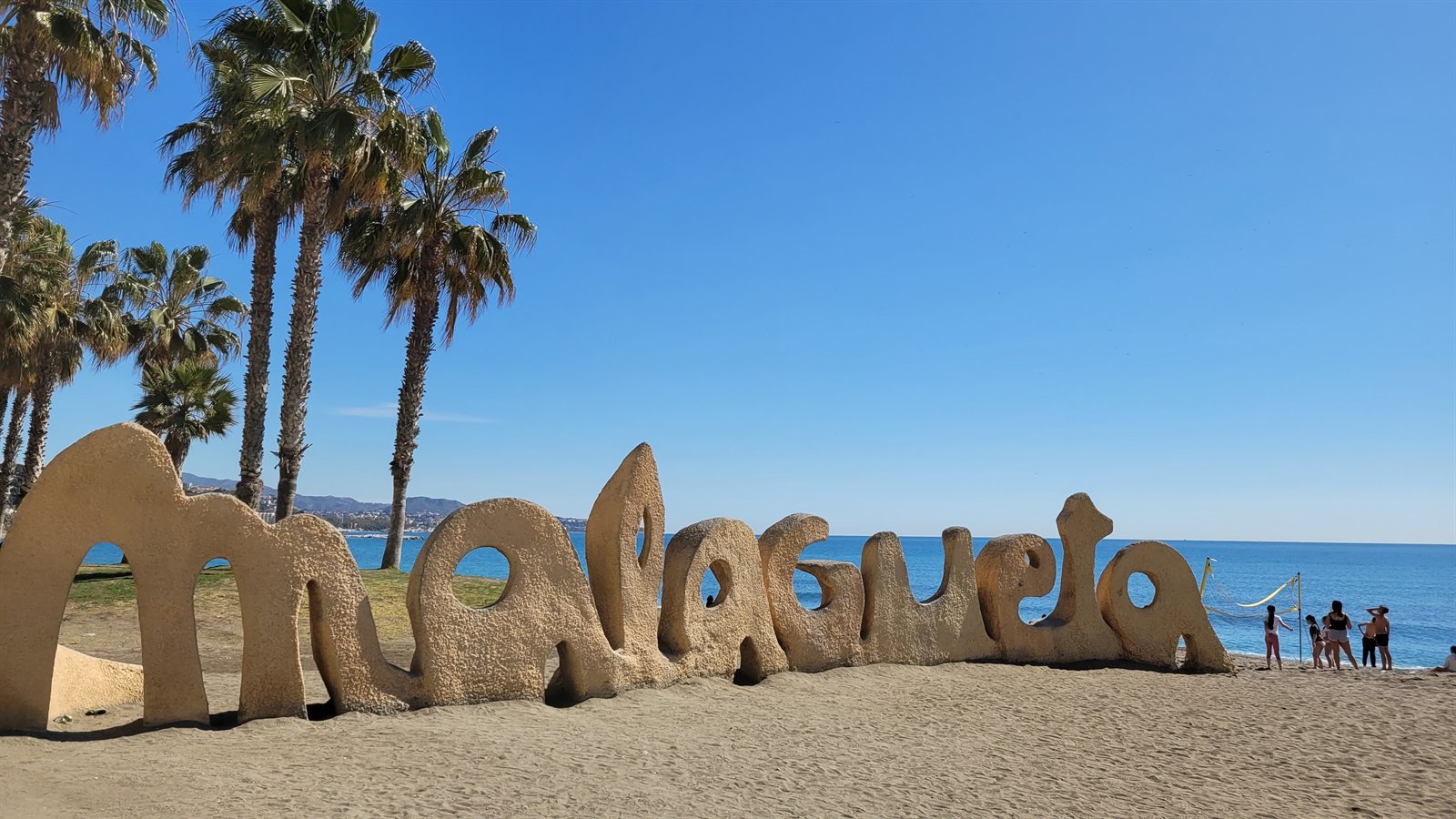
Malaga’s Extranjeria appointment system runs on cita previa, and slots can be genuinely scarce, which is one of the most common frustration points for new arrivals. We handle appointment booking, prepare your file for the fingerprinting appointment, and accompany you to it or to the Oficina in person when you want us there rather than navigating it alone. We also coordinate your empadronamiento (address registration) at the relevant Malaga town hall once you have somewhere to live, since it feeds into your health card and later renewal file.
If you are also weighing where to live once you arrive, our Moving to Malaga guide and Immigration Lawyer Malaga pages cover the practical side of the move alongside the legal one.
Clients who choose to work with our Malaga office rather than handle the file alone usually tell us the same thing afterwards: it was not any single step that was hard, it was keeping every document, deadline, and appointment aligned across two countries and several months without missing one. That is the part we take off your plate, from the first eligibility check at your consulate all the way through to your TIE card and your first empadronamiento appointment here in Malaga.
Non-Lucrative Visa fees, fixed and published
One flat professional fee per file. Government fees, consular fees, apostilles, sworn translations, and the TIE card tax are paid separately, at cost, directly to the relevant authority or provider.
| Service | What’s included | Fixed fee |
|---|---|---|
| NLV application, main applicantEligibility check through TIE guidance | Eligibility and income review, full document checklist, consulate filing support, entry and TIE guidance in Malaga | €950 |
| NLV application, additional family memberFiled alongside the main applicant | Income review, document review, filing support for each spouse, partner, or dependent added to the file | +€250 each |
| NLV renewal (after year 1)Two-year renewal cycle | Document refresh, updated means verification, renewal filing and TIE renewal | €300 |
Government fees are separate and small: the national visa tasa runs roughly €80-€120 depending on your consulate, and the TIE card fee is currently €16.08-€19.30. Apostilles, sworn translations, and health insurance premiums are paid to their respective providers. We quote the full third-party cost breakdown on your free call before anything is booked.
Three steps, start to finish
Free 10-min call
We check whether your income and savings meet the 2026 NLV thresholds and confirm you are on the right track, no obligation.
Fixed quote + document list
You get one flat fee and a checklist built for your specific consulate, so nothing is missing when you file.
We file and track to approval
We submit at the consulate, guide your arrival, and carry you through to your TIE card in Malaga, keeping you posted in English or Spanish.
Non-Lucrative Visa questions, answered
What is the income requirement for the non-lucrative visa in Spain in 2026?
The main applicant must show recurring income or savings of about 28,800 EUR for the first year, which is 400% of the annual IPREM. Each additional family member adds about 7,200 EUR, which is 100% of the annual IPREM. Renewal after the first year requires roughly double these amounts because the permit then covers two years.
Can I work remotely while on a non-lucrative visa?
Not in the way most people assume. The NLV is legally a no-work permit. Since the 2023 reform, holders can do limited remote work for a non-Spanish company as long as it stays a minor share of total professional income, but this is not the same as the freedom the digital nomad visa gives. If remote work is your main income, apply for the digital nomad visa instead.
How long does the non-lucrative visa take to process?
Budget four to eight months from first gathering documents to holding your TIE card. Consulate processing is officially up to three months, appointment availability adds weeks, and the TIE stage in Spain adds four to eight more weeks depending on your local Extranjeria office.
Can my family come with me on the non-lucrative visa?
Yes. A spouse or partner and dependent children can apply alongside the main applicant. Each additional family member needs their own proof of funds equal to 100% of the annual IPREM and their own set of apostilled, translated civil documents.
How do I renew the non-lucrative visa and what does it cost to renew?
The first renewal is granted for two years and requires showing about 57,600 EUR in funds for the main applicant, roughly double the first-year figure, plus about 14,400 EUR per additional family member. You also need to show you have not been absent from Spain for more than the allowed period.
What health insurance do I need for the non-lucrative visa?
A private policy from an insurer authorized to operate in Spain, with no copayments and no waiting periods, that covers you for the full duration of your stay at a level equivalent to Spain’s public healthcare system. A policy with excesses, deductibles, or repatriation-only cover is a common cause of refusal.
Do I need to register on the padron (empadronamiento) after I arrive?
Yes. Once you have a fixed address in Spain you should register at your local town hall. Empadronamiento is separate from your visa but it is needed for your health card, school enrollment, and for some renewal and TIE steps, so we schedule it in the first weeks after arrival.
What are the most common reasons a non-lucrative visa gets refused?
Inconsistent or undocumented income, a health insurance policy with copayments, missing or improperly apostilled and translated civil or criminal record documents, and consulates doubting that the applicant genuinely does not intend to work in Spain.
What happens if my non-lucrative visa is denied?
You can file a recurso de reposicion, an administrative appeal, within one month of notification, or go directly to a contencioso-administrativo court appeal within two months. We review the refusal letter and handle either route; most consular refusals we see are winnable on appeal when the paperwork issue is fixable.
Does the Beckham Law apply to non-lucrative visa holders?
No. The Beckham Law flat tax regime is for people relocating to Spain for employment or certain professional activity. Non-lucrative visa holders are, by definition, not working, so once you spend more than 183 days a year in Spain you become a standard Spanish tax resident taxed on worldwide income at ordinary progressive rates.
What is the difference between the non-lucrative visa and the digital nomad visa?
The non-lucrative visa is for people who can live on savings, pensions, or investment income and will not work. The digital nomad visa is for people who work remotely for a foreign employer or clients and want that income to be legal in Spain, with a different income threshold and a beneficial tax option in some cases.
Which Spanish consulate handles my non-lucrative visa application?
The Spanish consulate with jurisdiction over your current place of legal residence, not a consulate you choose freely. Each consulate sets its own appointment system and can ask for slightly different supporting documents, so we confirm the exact local checklist before you book.
Can I get my TIE card in Malaga if my visa was issued elsewhere?
Yes. Once you enter Spain on the visa and settle in the Malaga province, you apply for your TIE card at the local Oficina de Extranjeros or comisaria that covers your address, regardless of which consulate abroad issued the original visa.
You might also need
Let’s talk through your situation
Tell us where you’re at, we’ll tell you what it takes, in plain English or Spanish. No obligation.
No obligation. English, Spanish.
- Response time
- Within 24 hours
- Call length
- 10 minutes, free
- Languages
- English and Spanish
- Location
- Calle Reding 6, Malaga, or video call