



Quick answer
EU schools fund a class trip to Spain mainly through Erasmus+ KA122-SCH, the short-term school education project that needs no prior accreditation. The grant pays pupils' and accompanying teachers' travel and subsistence for a "group mobility of pupils" of at least 2 pupils lasting 2 to 30 days. Only the school, or another school-education organisation, applies to its own National Agency, never a travel agency or course provider.
In this article
Can Erasmus+ actually pay for a school trip to Spain?
Yes, for most schools in EU member states and in the countries associated to the programme, a class trip to Spain can be funded under Erasmus+ Key Action 1 (KA1) in school education. A school applying for the first time normally uses the short-term route, KA122-SCH, rather than the accredited route, KA121-SCH. The grant does not go to us or to any travel company: it is paid to the applying school by its own National Agency, and the school spends it within the rules.
The dates, the destination and the course you book stay yours to choose, within the mobility rules below. What Erasmus+ adds is a grant covering the travel and subsistence of the pupils and the teachers who go with them, provided the trip is built as an eligible mobility activity and applied for correctly. Get that structure right first, then plan the week.
What is KA122, and do we need accreditation first?
You do not need accreditation to apply once. Erasmus+ school education mobility has two entry points:
| Route | Who it is for | How often |
|---|---|---|
| KA122-SCH (short-term project) | Schools and other school-education organisations without accreditation | Projects run 6 to 18 months; at most 3 short-term grants in any 5 consecutive call years |
| KA121-SCH (accredited project) | Organisations that already hold an Erasmus accreditation in school education (KA120) | Simplified, recurring applications every year, for schools with a long-term mobility plan |
Accreditation (KA120) is a quality label awarded by a National Agency to a school with a documented, multi-year Erasmus Plan; accredited schools cannot apply for KA122. It is worth applying for if you expect to send pupils or staff abroad most years. For a single class trip, or for a school trying Erasmus+ for the first time, KA122 is the normal route.
What exactly counts as “group mobility of pupils”?
This is the activity that matches a class trip, and its rules are specific:
- Group size: at least 2 pupils per group. There is no published upper limit, so a whole class can travel together.
- Duration: 2 to 30 days of physical mobility abroad (the time in Spain, not counting travel days), which can be combined with virtual activities before or after.
- Supervision: teachers or other qualified staff from the sending school accompany the pupils for the entire duration and guide the learning. Other adults can travel too, to support the accompanying teachers.
- Where it happens: the activity must take place at a hosting school, with the sending school designing the learning programme in cooperation with a partner school in the hosting country. Another venue in that country is allowed only exceptionally, when the content and quality of the activity justify it. Wherever it happens, it must involve pupils from at least two EU Member States or associated countries.
- Other formats exist for individual pupils rather than a class: short-term individual mobility (10 to 29 days) and long-term individual mobility (30 to 365 days). These suit an exchange student more than a group trip.
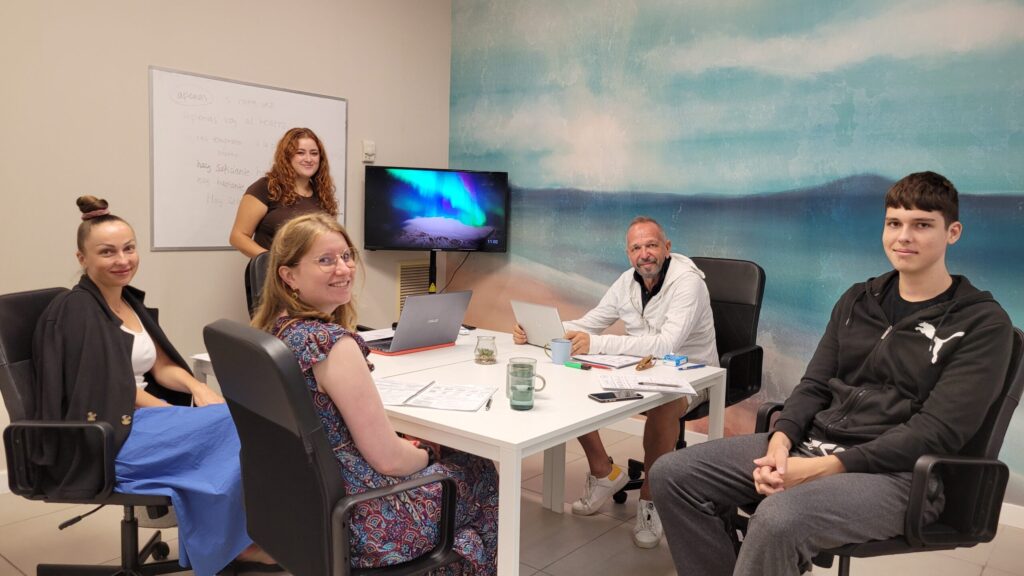
Read that hosting-school requirement carefully, because we want to be straightforward about where we fit in it: Vamos Academy is a private Spanish-language school, not a secondary school, so we cannot be your hosting school or your partner school, and we are not an Erasmus+ accredited organisation. In a funded group mobility, our lessons and homestay can at most be one part of a programme your school designs with its Spanish partner school. Whether that part is eligible is for your National Agency to confirm, so ask it before you budget for it; the application, the partnership and the reporting stay with your school.
Who applies for the grant, and what do they submit?
Only the school, or another organisation active in school education, can apply, to its own country’s National Agency, not to a Spanish body or to us. Léargas is the National Agency for Ireland, and the PAD in Germany; every Programme country has its own, and a travel agency, tour operator or language school cannot submit the application on a school’s behalf.
The application asks for a project description, the planned activities and their European added value, how pupils will be selected (fairly, inclusively, transparently and well documented, per the guidance), and for group mobility, evidence of cooperation with your hosting school. If approved, the grant agreement and the reporting afterwards sit between your school and your National Agency.
How much funding does a group actually get?
The grant is built from unit costs, not a reimbursement of your actual invoices. It is designed to cover participants’ travel and the group’s subsistence while in Spain, plus a contribution to the sending school’s organisational costs, with extra support available for participants who need it (for example for a disability or for a participant from a disadvantaged background). The exact amounts, which vary by travel distance band and by a cost-of-living grouping of the destination country, are published and updated every year in the Erasmus+ Programme Guide rather than fixed in the legal base, so we are not going to quote a euro figure here that could be a year out of date by the time you read this. Check the current Programme Guide, or ask your National Agency for the unit cost tables for your call year, before you build a budget.
SPANISH COURSES
Get course dates & prices
Real reply from our team, usually same day. No spam.

What this means for planning a trip to Málaga: treat the Erasmus+ grant as the part of the budget that covers getting your group here and keeping them fed and housed at the rates the Programme Guide sets, and treat our Málaga prices as the separate, real cost of the lessons, accommodation and transfers you are actually booking. The two numbers are not the same thing, and a good budget keeps them apart.
Plan the trip side by side with the funding: see what a school trip to Málaga costs per student for a worked example, then get a group quote · download the course syllabus (PDF) for your records.
When is the deadline to apply for a 2027 trip?
For the most recently published call, Call 2026, KA122-SCH applications had a first round with a deadline of 19 February 2026 at 12:00 Brussels time (for projects starting between 1 June and 31 December 2026) and an optional second round with a deadline of 1 October 2026 (for projects starting between 1 January and 31 May 2027). Round 2 opens only where a National Agency decides to run it and announces it on its website, so confirm with your own agency.
At the time we checked this page (28 October 2026), the Erasmus+ Programme Guide and the Call 2027 documents had not yet been published, so check the 2027 call once it is out; the 2026 call was published in November 2025. If you are planning a trip for the 2027/28 school year, use the 2026 pattern above as a rough guide to timing, then check erasmus-plus.ec.europa.eu and your National Agency directly once the 2027 guide is out, rather than relying on last year’s exact dates.
Can UK schools apply for Erasmus+ funding?
Not yet, but that is changing. UK schools currently sit outside Erasmus+ and have used the Turing Scheme to fund international trips since Brexit. In April 2026 the EU and UK agreed, through an amendment to the Trade and Cooperation Agreement, to associate the UK to Erasmus+ from the 2027/28 academic year, putting UK learners, staff and institutions on the same footing as those in EU member states. The British Council will run the UK side as National Agency, with funding bids expected to open from November 2026 for 2027/28 projects.
For 2026/27 the Turing Scheme is the UK route: for schools it funds travel, living costs and the accompanying staff needed for safeguarding, for placements between 1 September 2026 and 31 August 2027. Its 2026/27 applications closed on 16 March 2026, so it helps only schools that already applied. A Spanish course and homestay in Málaga fits that kind of placement just as it fits Erasmus+ group mobility; only the funding scheme and the application portal differ.
What does Vamos Academy provide for your Málaga trip?
Whichever funding route your school uses, or none at all, our high school programme in Málaga is built for groups travelling with a teacher. Every student takes a free placement test and joins a class formed by level, taught by native, experienced teachers, with no enrolment fee and no materials fee. One named coordinator looks after your group from the first email to the flight home, and group programmes are delivered by staff who hold the certificates Spanish law requires for working with minors. Send us your dates, numbers, ages and level and we come back with lessons, activities, accommodation and transfers in one package, usually within one business day.
Two things help your paperwork specifically. First, send us the syllabus your students follow and our academic team builds the lessons around its topics, which helps justify the “learning activities” your application describes. Second, every student leaves with a progress report stating the CEFR level reached and the hours completed, a document you can attach to your grant report, though whether it counts as school credit is still a decision for your own school. Our teacher’s guide to a school trip to Málaga has the per-student cost breakdown, the sample week and the safeguarding questions worth asking any provider.

Accommodation is usually homestay with a local family (the only option for an individual under-18 booking) or, for groups, a student residence where places depend on the season and the students’ ages. Our homestay in Málaga page explains how families are matched; the group quote prices whichever option fits your numbers and dates.
Can teachers get Erasmus+ funding too, separately from the pupils?
Yes: that is a different KA1 activity, staff mobility, which funds a teacher’s own professional development rather than a class trip, and one we already support directly. We hold an Erasmus+ organisation ID, OID E10437441, and our Spanish course for Erasmus students and staff page describes a structured Spanish course and job shadowing at our school for staff with an approved KA1 project, with the documents a grant report needs. An OID is not accreditation; it only means we are registered in the Erasmus+ organisation database, which any organisation can do. For a staff member’s own training mobility, that page, not this one, is the right starting point.

Frequently asked questions
Can a private language school in Spain apply for Erasmus+ funding on our behalf?
No. Only the pupils’ own school, or another organisation active in school education, can apply, and it applies to its own National Agency. A language school, travel agency or tour operator cannot submit the application; we can only be the course and accommodation provider your school books once its own application and partnership are in place.
How many pupils do we need for group mobility of pupils?
At least 2 pupils per group, with no published upper limit, so a full class can travel together. Teachers or other qualified staff from the sending school must accompany the pupils for the whole stay.
How long can an Erasmus+ group trip to Spain last?
Group mobility of pupils runs from 2 to 30 days of physical mobility, not counting travel days, and can be blended with virtual activities before or after the trip. Individual pupil mobility (for one student rather than a class) runs from 10 days up to a year.
Do we need Erasmus+ accreditation to send a class to Spain once?
No. Accreditation (KA120, leading to KA121 projects) is for schools with a long-term, repeated mobility plan. A school sending a class abroad for the first time, or occasionally, applies under KA122-SCH, which needs no accreditation, with a limit of 3 short-term grants in any 5 consecutive call years.
When is the deadline to apply for a trip in the 2027/28 school year?
Check the 2027 call: it was not yet published when we checked this page on 28 October 2026. Last year’s call (2026) had a first round deadline of 19 February 2026 and an optional second round on 1 October 2026, so confirm the 2027 dates with your National Agency.
Can UK schools use Erasmus+ for a trip to Spain yet?
Not yet. UK schools are not currently part of Erasmus+; the UK’s association takes effect from the 2027/28 academic year, with applications opening through the British Council from November 2026. For the 2026/27 school year the Turing Scheme applies instead, but its 2026/27 applications closed on 16 March 2026.
Does the Erasmus+ grant cover the whole cost of the trip?
Not necessarily. The grant is calculated from unit costs for travel and subsistence, set yearly in the Programme Guide, plus a contribution to the sending school’s organisational costs. Build your course, accommodation and transfer costs separately from our published prices, then compare that total with what the grant is likely to cover.
Is Vamos Academy an Erasmus+ accredited organisation?
No. We hold an Erasmus+ organisation ID (OID E10437441) and host staff with approved KA1 projects for courses and job shadowing, but an OID is registration, not accreditation. For a class trip your school is the applicant, and the partner the rules require is a school in Spain, not us.
Can Erasmus+ funding cover a DELE exam during the trip?
There is no separate Erasmus+ budget line for exam fees: the grant is built from unit costs for travel, subsistence and organisational support, so ask your National Agency before counting on it. If your students want an official certificate alongside the course, our DELE and SIELE exam preparation in Málaga page has the preparation prices.
Ready to put the dates and the funding side by side?
Send us your dates, numbers, ages and level and we will reply with lessons, activities, accommodation and transfers priced per student, usually within one business day, while your own team handles the Erasmus+ or Turing application in parallel.
Related reading - Planning a Spanish school trip to Málaga: cost per student, safety and a sample week - High School Spanish Programs in Spain: A Parent’s Guide - Erasmus in Spain: Adding a Spanish Course
Sources: Erasmus+ Programme Guide rules for school education mobility, checked 28 October 2026: mobility for pupils and staff in school education, pupil mobility, Call 2026 KA122-SCH application form. Irish National Agency: Léargas, school education mobility. UK association to Erasmus+: European Commission announcement, UK government, Erasmus+: what you need to know. Turing Scheme for 2026/27: GOV.UK, Turing Scheme, Turing Scheme guidance for schools, 2026 to 2027, GOV.UK, UK and EU finalise agreement (15 April 2026). Our own facts: high school programme in Málaga, Spanish course for Erasmus students and staff, Málaga prices.
Updated 28 October 2026.