


Quick answer
There is no single Spanish level for working in Málaga as a foreigner: by the CEFR descriptors, tourist-facing hospitality and retail jobs can run on A2 to B1, remote or English-language roles need far less, and office, sales or management jobs in Spanish companies generally call for B1 to C1. The right level depends on the job and the team around you.
In this article
Do you actually need Spanish to work in Málaga?
It depends entirely on the job, and this post answers that question by job type using the CEFR descriptors our teachers use every day, as reasoned guidance rather than statistics we do not have. The range is wide: some foreigners work years in Málaga on English alone, inside international teams or remote jobs, while others need confident, fast Spanish from day one, dealing with suppliers, colleagues or a Spanish boss. Before anything else, separate two different questions. Whether you are legally allowed to work in Málaga is a visa and work permit question, not a language one; whether you can actually do the job well is the Spanish question this post focuses on.
On the legal side, briefly and at a high level: as an EU citizen you generally do not need a work permit to work in another EU country, Spain included, according to the EU’s own Your Europe guide to work permits. Non-EU citizens generally need a residence and work authorisation before they start a job, a process separate from how much Spanish they speak. We are a language school, not an immigration adviser: check the current rules for your nationality with the Spanish consulate in your country or the Spanish government’s immigration portal before you commit to a move.
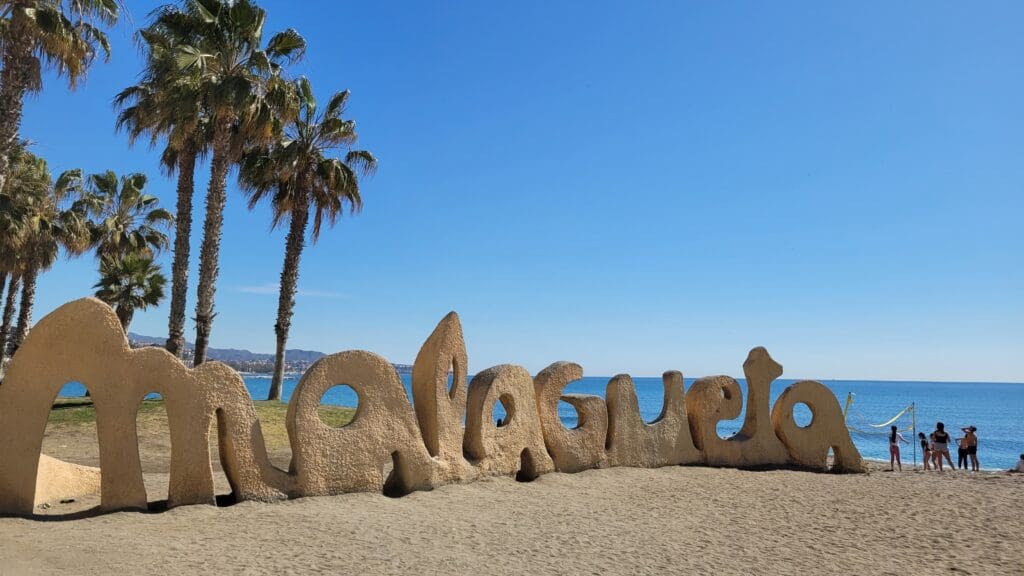
What Spanish level do tourism, hospitality and retail jobs need?
These are the jobs with Spanish-speaking customers and colleagues day to day: hotel reception, bars and restaurants, retail serving a mixed local and tourist clientele, and tour or activity guiding outside the most English-heavy routes. By the CEFR descriptors, A2 already lets you communicate in simple, routine tasks and describe your surroundings, which covers a lot of a shift: taking an order, giving directions, handling a straightforward complaint. B1 is where it gets comfortable: you can cope with most situations that come up, including the irregular ones a script does not cover, such as a client who is annoyed, confused, or asking something unusual.
Our own business Spanish curriculum starts at A2: introductions, small talk, e-mails and phone or video calls are block 1, the first 10 hours, and from block 3 you can choose a tourism and hospitality track (check-in, upselling, reviews and complaints). If your job is mostly transactional and scripted, A2 may be enough; if it involves resolving problems on the spot, B1 is the more honest target.
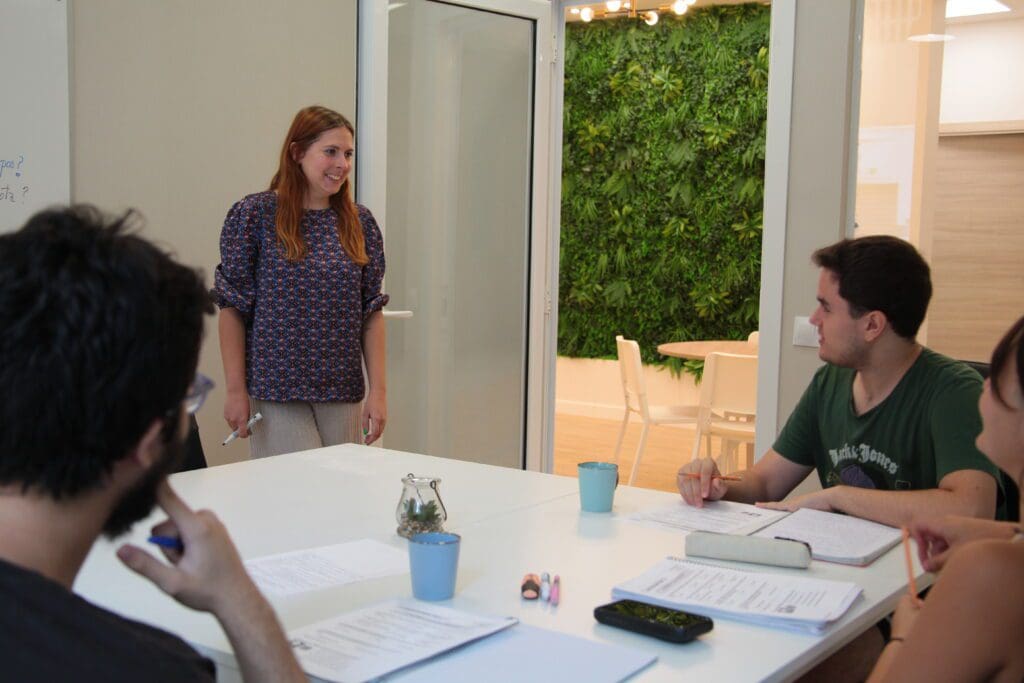
What Spanish level do remote and English-language company jobs need?
Working for an international company, a remote employer, or an English-speaking team in Málaga is the one category where the job itself may ask for almost no Spanish. The CEFR still matters for your life outside work, though: A1 covers greetings, personal details and simple everyday needs, and A2 adds routine transactions and simple past tense, which is roughly what you need to rent a flat, deal with the bank, or sort out the NIE process without relying on English-speaking staff every time.
The honest risk in this category is staying at A1 indefinitely because the job never forces you past it. If you want more than a surface life in Málaga, that is a deliberate decision to study beyond what work requires, not something the job will teach you on its own. Our Intensive group course runs Monday to Friday, 9:30 to 13:30 (20 hours a week), which can fit around a remote job with afternoon or evening hours.
What Spanish level do office, admin and client-facing roles need?
Once a job involves regular written Spanish (internal e-mails, reports, basic contracts) or speaking with local clients and suppliers, B1 becomes the realistic floor and B2 the comfortable level. At B1, by the CEFR descriptors, you can produce simple, coherent texts on familiar topics and give opinions; that is enough to follow a meeting and contribute to it, though not to lead one. B2 adds fluent, spontaneous interaction with native speakers and the ability to produce clear, detailed texts on a wide range of topics, which is where you stop translating in your head before you speak.
FREE RESOURCES
Free Spanish study pack
Printable study sheets from our teachers, plus one short email a week.
One email, then a short weekly tip. Unsubscribe any time.

Our own business Spanish hours map this directly: following a meeting starts at B1 and presenting with questions sits in the B1 to B2 band; both are covered in the first 20 to 30 one-to-one hours (blocks 1 to 3) once you already communicate at that general level. The one-to-one hours apply Spanish you already have to your job; they do not substitute for reaching B1 or B2 in the first place.
What Spanish level do you need to manage or lead a Spanish-speaking team?
This is where the gap between “getting by” and “doing the job properly” is largest. Leading a meeting in Spanish rather than following one, giving feedback that lands the way you intend, and negotiating with suppliers or clients are, by the CEFR, B2 to C1 skills: B2 lets you defend opinions and take part in debates, while C1 is where you use the language flexibly and effectively in professional contexts, understand implicit meaning, and build arguments without searching for words. In our own business Spanish curriculum, negotiation sits at B2 and is taught in block 2; leading meetings and writing reports is block 5, aimed at B2 to C1 learners.
If you are managing people day to day, consider the gap between B2 and C1 carefully: B2 is enough to get through the meeting, while C1 is where the language stops being the limiting factor when you give feedback or settle a disagreement. That does not mean you need C1 before you take the job; you can keep building towards it at work, with one-to-one hours targeted at the specific task (this week’s negotiation, this month’s performance review) rather than a general course.
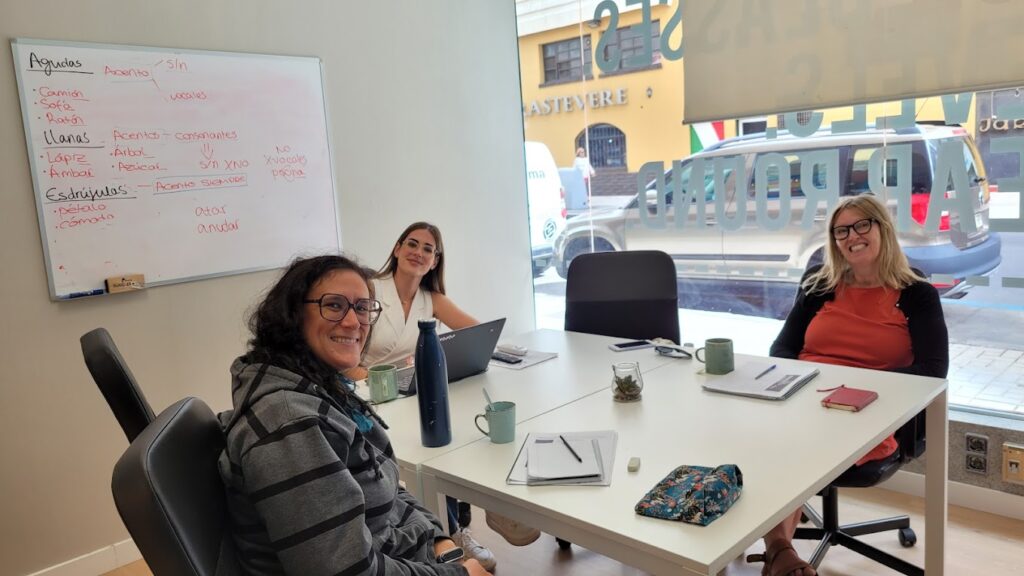
Do regulated professions need an official Spanish certificate, not just a level?
For teaching, healthcare, law and other regulated professions, the honest answer is: check the regulator, do not assume a CEFR level is enough on its own. Some of these routes (homologación of a foreign qualification, professional registration or a public exam) may ask for an official Spanish certificate such as the DELE, separately from however well you actually speak; others do not. This varies by profession and by the country where you qualified, so we will not state specific rules here; verify the current requirement with the relevant professional body or the Spanish ministry for your field before you plan around a level alone.
What we can help with directly is the exam side. Our DELE and SIELE exam preparation is planned around your level and your exam date, 40 hours for €560 or 60 hours for €810; the exam fee itself is paid to the exam centre, separately from the preparation lessons.
Not sure where you stand? Take the free level test · See our business Spanish hours · WhatsApp us
How many class hours does it take to reach each level?
The levels above are not abstract: our own Intensive course plan sets out exactly how many class hours they take, at 20 hours a week, from zero.
| Level | Class hours (cumulative) | Weeks at Intensive pace (20 h/week) |
|---|---|---|
| A2 | 160 h | 8 weeks |
| B1 | 280 h | 14 weeks |
| B2 | 400 h | 20 weeks |
| C1 | 520 h | 26 weeks |
That is class time only: our course plan pairs roughly one hour of independent study with every two hours of class, so the realistic total is higher, and progress always depends on how much Spanish you practise outside class, at work and in the city. If you are moving to Málaga for a job and want to arrive closer to the level it needs, the practical options are to start before you move (our online Trato Hecho business course or group classes in your home country), take an intensive block once you arrive, or combine a general course with one-to-one hours targeted at your actual tasks at work.

Group course, private lessons, or both, for a working adult?
If you are employed full time, the honest constraint is usually your schedule, not your motivation. Our Intensive group course runs mornings, Monday to Friday, 9:30 to 13:30, which suits a job with afternoon or evening hours, a career break, or a planned block of weeks before you start work. If your hours are fixed during the day, private lessons, booked Monday to Friday between 9:00 and 20:00 in sessions of 1 to 3 hours, adapt around your actual timetable instead.
You can combine general progress with job-specific hours rather than choosing only one: general classes (group or private) build the level itself, while one-to-one business Spanish hours apply that level to e-mails, meetings, negotiation or your own sector once you are at A2 or above. There is no single right mix; it depends on how far you already are from the level your job needs and how soon you need it.
How do you find out your own starting level before you commit to anything?
If you do not know your exact CEFR level, guessing it can lead to either an underwhelming course or an overwhelming one. The free online level test takes a few minutes, and if you book any course with us, our Academic Director confirms it with a short written test and interview on your first day. From there, tell your teacher the actual job (the meetings you will run, the e-mails you dread, the industry vocabulary you need) and the course is built around that task rather than a generic syllabus.
Frequently asked questions
Do you need Spanish to get a job in Málaga?
It depends on the job. Tourism, hospitality and retail roles that deal with Spanish-speaking customers usually need at least A2 to B1. Remote jobs and roles inside English-language or international companies may need very little Spanish for the work itself, though daily life in Málaga is easier well before that level.
What Spanish level do you need to work in a Málaga restaurant or hotel?
By the CEFR descriptors, A2 covers routine transactions and simple, clear exchanges, which handles most of a shift. B1 is more realistic if the role includes resolving complaints or unusual requests, since it lets you cope with situations a script does not cover.
Can you work in Málaga with no Spanish at all?
Some foreigners do, mainly inside remote jobs or English-language companies, but it limits daily life outside work and narrows which local jobs are realistically open to you. Even A2, about 8 weeks at Intensive pace in our course plan, makes renting a flat, dealing with the bank and the NIE process, and basic social life considerably easier.
What Spanish level do you need to manage people in Spanish?
By the CEFR, leading a meeting, negotiating and giving feedback that lands as intended are B2 to C1 skills. B2 is enough to get through a meeting; C1 is where the language itself stops being the limiting factor.
How long does it take to reach a working level of Spanish?
In our course plan, at 20 class hours a week, A2 takes about 8 weeks, B1 about 14 weeks, B2 about 20 weeks and C1 about 26 weeks, plus independent study alongside the class hours. Progress varies with how much Spanish you practise outside class.
Do I need a work permit to work in Málaga as a foreigner?
EU citizens generally do not need a work permit to work in another EU country, including Spain. Non-EU citizens generally need a residence and work authorisation before starting a job, a legal process separate from your Spanish level. Check the current rules for your nationality with an official source or an immigration adviser, not a language school.
Do regulated jobs like teaching or healthcare need an official Spanish exam?
Sometimes. Some routes (professional registration, homologación or a public exam) ask for an official Spanish certificate, separately from how well you actually speak. Requirements vary by profession and by where you qualified, so check with the relevant regulator before planning around a CEFR level alone. We prepare students for the DELE and SIELE exams if one is required.
Is business Spanish different from general Spanish classes?
Yes. General classes (group or private) build your overall level against the CEFR. Our one-to-one business Spanish starts at A2 and applies the Spanish you already have to meetings, e-mails, negotiation and your own sector; it does not replace the general levels.
Can I start learning before I move to Málaga?
Yes. Online one-to-one business Spanish covers the same core curriculum as our in-person course, so you can make a start before you arrive and continue in Málaga once you are here.
How do I find out what level I actually am?
Take the free online level test, which takes a few minutes. If you book a course with us, our Academic Director confirms your level with a short written test and interview on your first day.
Ready to find your own number?
Take the free level test to see where you stand against the levels above, then tell us the job so we can point you to the right course. Book Business Spanish or write to us on WhatsApp first if you want to talk it through.
Related reading - Working in Spain as an International Student - Moving to Málaga from abroad: the legal checklist for your first 90 days - How Long Does It Take to Learn Business Spanish?
Sources: CEFR descriptors, course plan, hours and prices from our own pages, checked 28 October 2026: Private 1-on-1 Spanish lessons, Málaga (CEFR competences by level), Business Spanish in Málaga, Intensive course. Work permits: EU Your Europe, work permits.
Updated 28 October 2026.