

Quick answer
Summer in Argentina runs from December to February, so studying Spanish in Buenos Aires in January means escaping the northern winter entirely. Schools run their full timetable, evenings are long and life moves outdoors. Many locals take their holidays in January, so February gives similar weather with more of the city open.
While northern Europe and North America are in the middle of winter, Buenos Aires is in the middle of summer. That inversion is the whole argument for studying Spanish in Argentina between December and February, and it is a stronger argument than it first sounds.
You get long evenings, a city that lives outdoors, and a study window that does not cost you any of your own summer. What you also get is a quieter, hotter, slightly emptier Buenos Aires, and it is worth knowing that before you book.
In this article
When is summer in Argentina?
Argentina is in the southern hemisphere, so the seasons run opposite to Europe and North America. Summer covers roughly December, January and February, with the heat usually peaking in January. December still feels like the end of the school year, February feels like the return.
The practical consequence for a language trip is that the cheapest, darkest months in your own country are the brightest ones here. A January course in Buenos Aires is a January most people do not get.
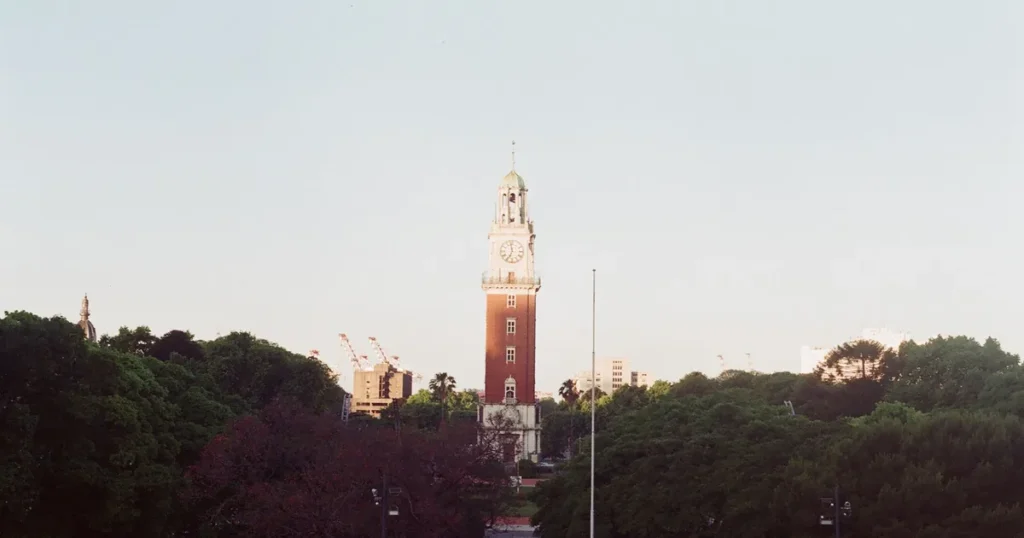
What is Buenos Aires actually like in January?
Hot and humid, and organised around that fact. Days are long, the city eats even later than usual, and life moves to the evening. Parks fill after eight, restaurants fill after nine, and the useful hours for walking around are early morning and after sunset.
The city also empties. Porteños who can leave take their holidays in January, heading for the Atlantic coast or the interior. Some restaurants and small businesses close for a few weeks. Traffic thins noticeably, and so do the queues.
Whether that is a gain or a loss depends on what you came for. If you wanted the maximum density of local life, February is a better bet than January. If you wanted space, cheap movement and a city you can actually see, January is excellent.
Do Spanish schools stay open in the southern summer?
Yes. Language schools in Buenos Aires run through the southern summer precisely because it is a peak arrival period for students from the northern hemisphere. Expect group courses at all the usual levels and a noticeable share of classmates who are also escaping a northern winter.
Two things do change. The mix of nationalities skews towards Europe and North America in January, more so than in the shoulder months. And the social calendar leans outdoors, since nobody wants to be indoors at four in the afternoon.
FREE RESOURCES
Free Spanish study pack
Printable study sheets from our teachers, plus one short email a week.
One email, then a short weekly tip. Unsubscribe any time.

TripAdvisor Travelers' Choice winner
Read the Buenos Aires reviews
Written by IreneSpanish Teacher, Malaga
How does summer compare with the rest of the year?
| Period | Weather | The city | Best for |
|---|---|---|---|
| December to February | Hot and humid, long evenings | Quieter, many locals away in January | Escaping a northern winter, outdoor life |
| March to May | Warm, then mild | Full, back to work, cultural season starts | The best all round balance |
| June to August | Cool and grey, rarely freezing | Indoor city: theatre, cafés, tango | Low season prices, small classes |
| September to November | Mild and bright | Busy and pleasant, jacarandas in bloom | Sightseeing alongside study |
Is the summer a good time to learn, or a distraction?
Both, honestly, and the way you structure the trip decides which one wins.
Reading about Buenos Aires from far away?
Our school is in the middle of it: small-group Spanish classes with local teachers who send you to the places tourists never find.
See our Buenos Aires schoolThe case for it is that summer Buenos Aires gives you an unusual amount of unstructured speaking time. Life happens on the street, plans are loose, and evenings are long enough that a coffee after class turns into four hours of Spanish without anyone deciding it should. That is exactly the kind of exposure that classroom hours cannot manufacture.
The case against is heat and drift. Twenty lessons a week in thirty five degree humidity is genuinely tiring, and a city on holiday makes it easy to let a week slide. Two habits fix most of it:
- Take the morning class. Study before the heat arrives and keep the afternoon for the city.
- Fix one commitment. A weekly tango class, a football match, a language exchange. Something recurring that is not the course.
What should you plan for?
- Heat management. Check that your accommodation has air conditioning rather than assuming it does. In January this matters more than the location.
- Closures. Some restaurants, shops and cultural venues shut for part of January. Museums and the big attractions stay open.
- Booking earlier. Southern summer is a peak arrival window for foreign students, so accommodation near the centre goes early.
- Money. Argentina’s currency situation moves quickly and advice dates fast. Read our guide to the cost of living in Buenos Aires and check current conditions close to your departure rather than months out.
- Weekend range. Summer is when the coast, the delta at Tigre and the estancias outside the city are at their best, and they are all reachable for a weekend.
What do you do with the weekends?
This is where the southern summer earns its keep, because the things that are difficult to reach in a Buenos Aires winter are all at their best in January and February.
- Tigre and the delta. An hour by train from the city, a maze of rivers and wooden houses reachable only by boat. It is the standard first weekend and it is genuinely good.
- The Atlantic coast. Mar del Plata and the smaller resorts along the coast are where the city goes in January. Busy, loud, and the most Argentine thing you can do in summer.
- An estancia day. A day on a ranch outside the city, with horses, an asado and a lot of standing around in fields speaking Spanish with people who are not being paid to be patient with you.
- Uruguay. Colonia is a ferry ride across the river and makes an easy overnight trip, with the small bonus of hearing a different accent for a day.
The language argument for all of this is straightforward. Weekend trips force you into transactions you never rehearse in class: buying a ticket for the wrong train, asking where the boat leaves from, explaining a dietary restriction to somebody standing over a grill. Those are the conversations that stay with you.
Who is this trip actually for?
It suits people with a fixed northern winter gap: students between semesters, teachers on a long break, remote workers who can move for a month, and anyone taking a career break who would rather spend January somewhere with light in it.
It suits less well anyone whose priority is the densest possible immersion in local life, because January is the one month when a slice of that life is at the beach. Shift to late February and you get the weather with the city back at full strength.
Our Buenos Aires school in Recoleta runs courses through the southern summer, in a central location you can walk home from at night. If you want a sense of the wider argument for the city, read where to learn Spanish first, then pick your month.
Frequently asked questions
Is January a good time to study Spanish in Buenos Aires?
Yes, with one caveat. The weather is hot and the evenings are long, schools run their full timetable, and it lines up with the northern winter break. The caveat is that many locals take their holidays in January, so the city is quieter than usual. February gives you similar weather with more of the city back.
How hot does Buenos Aires get in summer?
Hot and humid, with January the peak month and afternoons that are uncomfortable for walking. Take a morning course, use the evening for the city, and confirm your accommodation has air conditioning before you book.
Do Spanish schools in Argentina close over the southern summer?
No. Buenos Aires language schools run through December, January and February, which is a peak period for students arriving from the northern hemisphere. There is normally a short closure around Christmas and New Year, so check the exact dates for the year you are travelling.
Is it cheaper to study in Argentina in summer?
Not especially, because southern summer coincides with high demand from foreign students. Argentina’s costs also move with its currency, which changes faster than any guide can track, so check current conditions shortly before you travel rather than relying on figures from last year.