


Quick answer
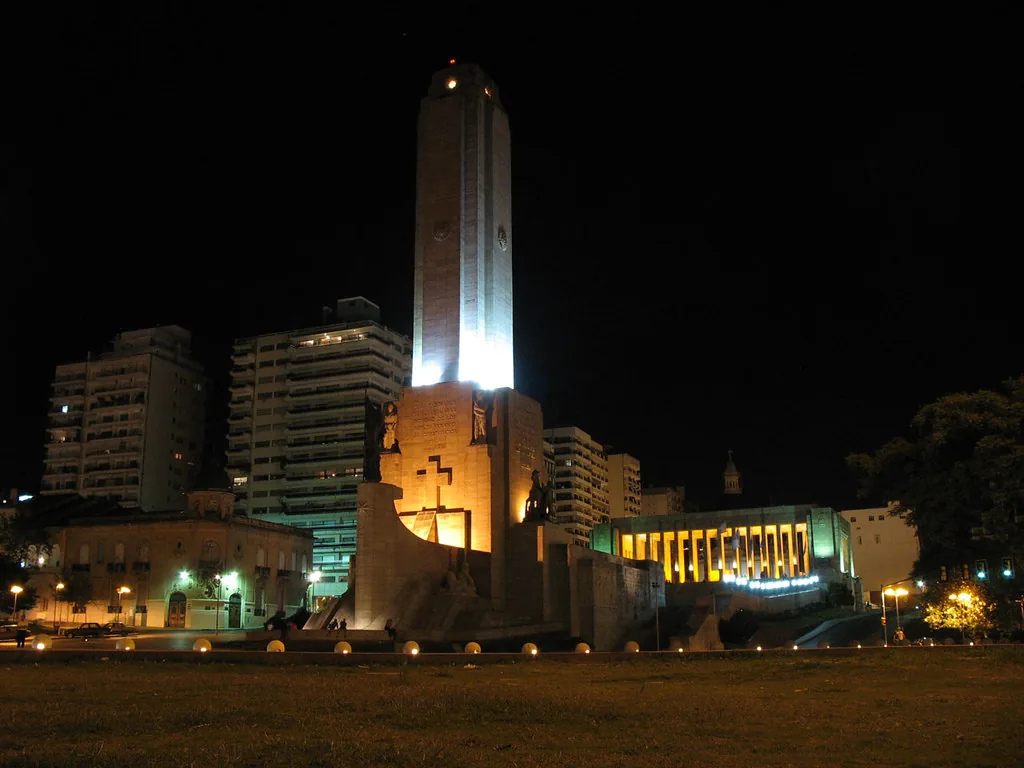
Rosario is on the Paraná river. This guide groups its places by area: the Monumento a la Bandera and the old centre around Plaza 25 de Mayo, the Parque de la Independencia with its museums, and the riverfront with MACRO, Parque de España and the Barquito de Papel.
In this article
The Flag Monument and the old centre
On 27 February 1812, Manuel Belgrano raised the Argentine flag for the first time near the Libertad and Independencia batteries. This was on the Paraná riverbank in Rosario. The Monumento a la Bandera stands in the city today.
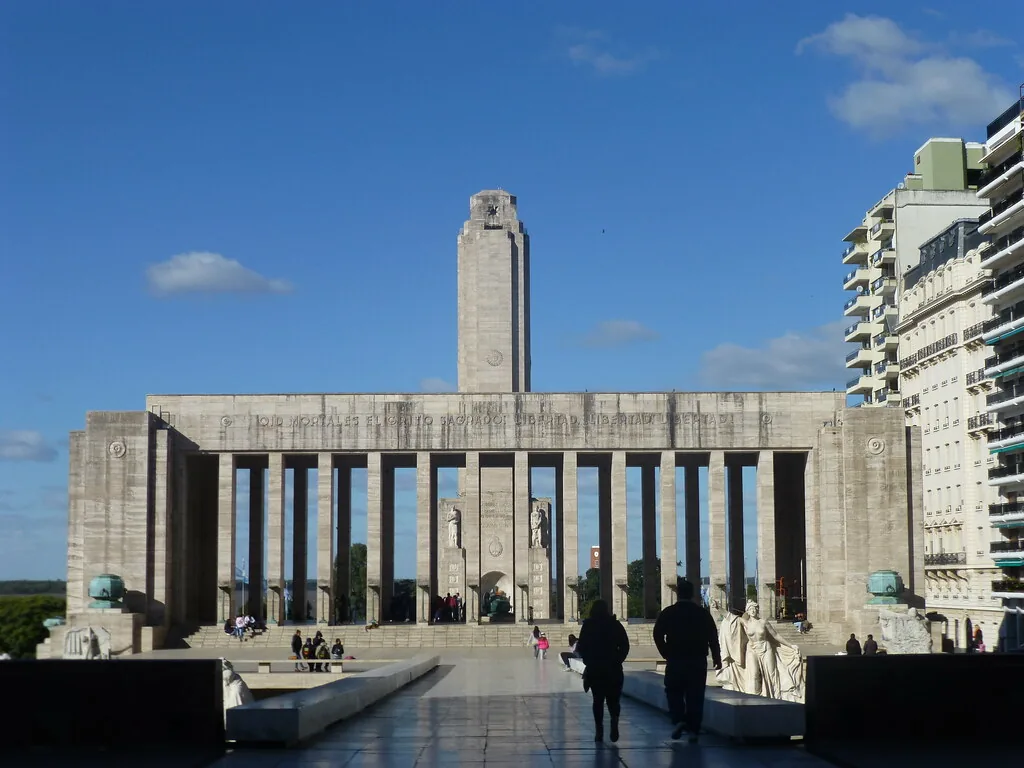
The foundation stone was laid in 1898. The design called “Invicta” won first prize in the competition in 1940. Construction began in 1943. The monument was officially inaugurated on 20 June 1957, after fourteen years of work. It was designed by the architects Ángel Guido and Alejandro Bustillo, with sculptures by Alfredo Bigatti and José Fioravanti.
The part facing the river has the Proa, the Torre and the Cripta. The Patio Cívico is a large staircase that joins the Proa with the Propileo. The Sala de las Banderas lies under the Propileo and holds the Flags of the Americas.
The Pasaje Juramento is a pedestrian walk with a stepped water mirror and sculptures by Lola Mora. It joins the Monumento a la Bandera with Plaza 25 de Mayo.
Plaza 25 de Mayo is surrounded by the Basílica Catedral, the Palacio de los Leones, the Correo Central and the Museo de Arte Decorativo Firma y Odilo Estévez. The Palacio Municipal is at Buenos Aires 711. It was designed by Gaetano Rezzara and built between 1890 and 1896. It is nicknamed the Palacio de los Leones for the Carrara marble lions at its entrance.
The Basílica Catedral Nuestra Señora del Rosario is at Buenos Aires 789. The image of the Virgin of the Rosary that stayed in the settlement gave the city its name.
Parque de la Independencia and its museums
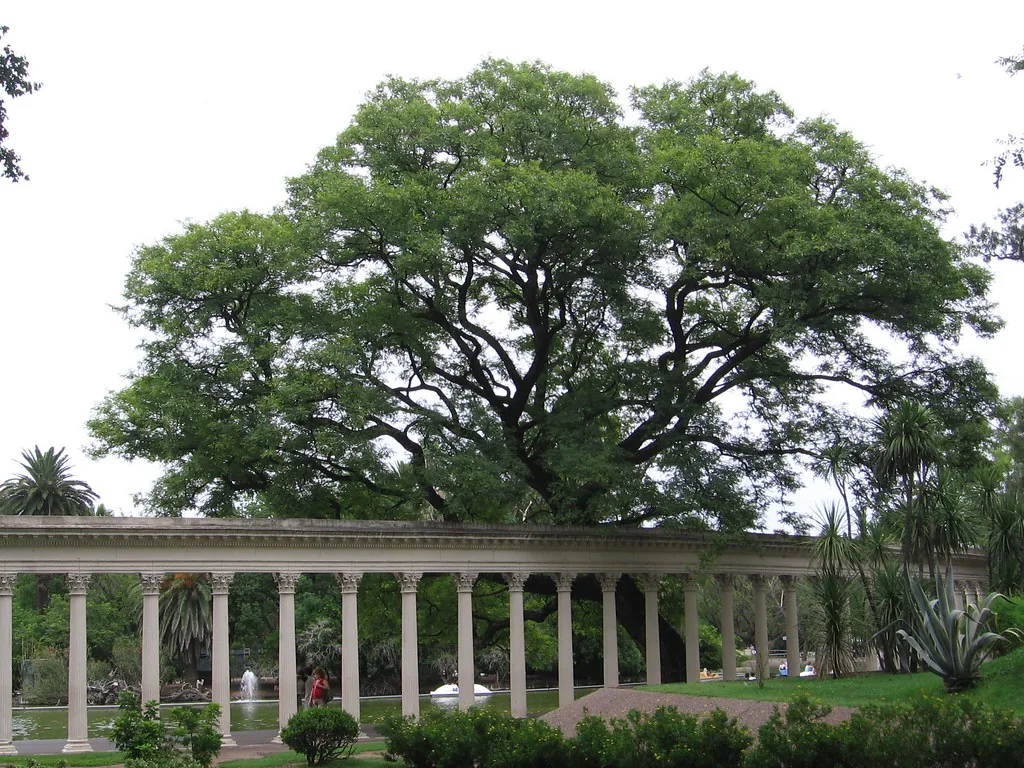
Carlos Thays planned the Parque de la Independencia around 1900 to mark the 1910 centenary. Its design has French, British, Spanish and Italian sectors. They represent European immigrant communities. The Laguito is the busiest part of the park, with a stretch of water and boat rides.
The Museo de la Ciudad and the Museo Histórico Provincial Julio Marc are inside the park. The Museo Castagnino stands just outside, across Avenida Pellegrini.
The Museo de Bellas Artes Juan B. Castagnino opened on 7 December 1937 in a building by the architect Hilarión Hernández Larguía. Its collections include Goya’s four print series and Argentine painting, with an emphasis on artists from Rosario.
The Museo Histórico Provincial Julio Marc has 38 exhibition halls at the centre of the park. It has Hispanic-American art, pre-Columbian objects and the Altar de Plata.
The Fuente de los Españoles was a gift from the Spanish community in October 1925. It was inaugurated in the Rosedal on 7 July 1929. It is 18 metres across and has more than 8,000 hand-painted ceramic pieces made in Talavera de la Reina, Spain. The restoration was completed in October 2024 by the Taller Fantoni Arte.
The riverfront: MACRO, Parque de España and the Barquito de Papel
MACRO is the contemporary art museum. It occupies former grain silos from the early 20th-century port area, facing the river on Avenida de la Costa. Its collection includes five Antonio Berni engravings from the Juanito Laguna series and Lucio Fontana’s Concepto Espacial from 1951.
The Parque de España is a riverside park at Sarmiento and the river. It has a cultural centre that includes the Teatro Príncipe de Asturias. It also has an elevated terrace with wide staircases down to the waterfront.
FREE RESOURCES
Free Spanish study pack
Printable study sheets, plus one short email a week.
One email, then a short weekly tip. Unsubscribe any time.

The Barquito de Papel is a sculpture by the Rosario architects Gustavo Augsburger and Daniel Kosik. It won the Premio Arnet a Cielo Abierto in 2012. It stands at the roundabout of Avenida de la Costa and Avenida Francia in Puerto Norte.
The Costa Nueva is a riverside promenade that runs from end to end for walking beside the Paraná river.
Bar El Cairo and La Isla de los Inventos
Bar El Cairo is at Sarmiento and Santa Fe. It is the birthplace of the Mesa de los Galanes, the group of friends of the writer Roberto Fontanarrosa. Their first meeting there was in 1980.
La Isla de los Inventos is a play and learning space in the former Rosario Central railway station. It has rooms and workshops along both sides of the old main platform. It is one of the spaces of the Tríptico de la Infancia.
The areas at a glance
| Area | Places | Museums |
|---|---|---|
| Monumento a la Bandera and the old centre | Monumento a la Bandera, Pasaje Juramento, Plaza 25 de Mayo, Basílica Catedral, Palacio de los Leones | Museo de Arte Decorativo Firma y Odilo Estévez |
| Parque de la Independencia | Laguito, Rosedal, Fuente de los Españoles | Museo de la Ciudad, Museo Histórico Provincial Julio Marc, Museo Castagnino |
| The riverfront | MACRO, Parque de España, Barquito de Papel, Costa Nueva | MACRO |
More about Rosario
Rosario has its own city tourism board, the Ente Turístico Rosario. It presents the city as the Capital del Helado Artesanal, the capital of handmade ice cream.
For related reading, see our guides to famous football stadiums in Buenos Aires, study Spanish in Argentina and long weekend trips from Buenos Aires.
Cover photo: Agent 1994 / Flickr, CC BY 2.0, CC BY 2.0.
More on Buenos Aires
 A weekend in Chascomús: the laguna, the old center and the small museums2026
 Tierra del Fuego National Park: where the Andes meet the Beagle Channel2026
- Things to Do in San Isidro, Buenos Aires: A Walk Through the Historic Centre2026
- Sierra de la Ventana: A Mountain Comarca Inside Buenos Aires Province2026
 Punta Tombo: a Patagonian penguin reserve for curious travelers2026
Frequently asked questions
Where did Manuel Belgrano first raise the Argentine flag?
On 27 February 1812, Manuel Belgrano raised the Argentine flag for the first time near the Libertad and Independencia batteries, on the Paraná riverbank in Rosario.
What are the main parts of the Monumento a la Bandera facing the river?
The river-facing side has the Proa, the Torre and the Cripta, and the Patio Cívico is a large staircase that joins the Proa with the Propileo.
Which museums are inside Parque de la Independencia?
The Museo de la Ciudad and the Museo Histórico Provincial Julio Marc are inside the park, and the Museo Castagnino stands just outside across Avenida Pellegrini.
What is MACRO and where is it located?
MACRO is the contemporary art museum occupying former grain silos from the early 20th-century port area, facing the river on Avenida de la Costa.
What is the Barquito de Papel and who designed it?
It is a sculpture by the Rosario architects Gustavo Augsburger and Daniel Kosik. It won the Premio Arnet a Cielo Abierto in 2012. It stands at the roundabout of Avenida de la Costa and Avenida Francia in Puerto Norte.
What is Bar El Cairo?
Bar El Cairo, at Sarmiento and Santa Fe, is the birthplace of the Mesa de los Galanes, the group of friends of the writer Roberto Fontanarrosa. Their first meeting there was in 1980.
What is La Isla de los Inventos?
It is a play and learning space in the former Rosario Central railway station. It has rooms and workshops along both sides of the old main platform. It is one of the spaces of the Tríptico de la Infancia.
Sources
- Monumento a la Bandera, historia del Monumento (monumentoalabandera.gob.ar) (monumentoalabandera.gob.ar/contenido/historia-monumento)
- Monumento a la Bandera, arquitectura (monumentoalabandera.gob.ar) (monumentoalabandera.gob.ar/arquitectura)
- Area Historica y Pasaje Juramento (Ente Turistico Rosario) (rosario.tur.ar/donde-ir/patrimonio/area-historica-y-pasaje-juramento)
- Parque de la Independencia (Ente Turistico Rosario) (rosario.tur.ar/donde-ir/rio-y-naturaleza/parque-de-la-independencia)