


Quick answer
The best way to learn Spanish is comprehensible input plus forced output, starting in week one. Consume Spanish you can almost understand, and speak before you feel ready. Structured teaching supplies correction and immersion supplies volume; either alone is much slower than both together.
There is no single best way to learn Spanish, but there is a best order, and most people get it wrong. They spend a year on vocabulary before speaking a sentence out loud. This guide sets out what actually works, in what sequence, and what to stop doing.
In this article
What is the best way to learn Spanish?
Comprehensible input plus forced output, from the first week. In plain terms: consume Spanish you can almost understand, and speak before you feel ready. Everything else is a delivery mechanism for those two things.
Methods that skip the second half produce the most common outcome in language learning: someone who can read a newspaper and cannot order a coffee.
Which learning method works best?
| Method | Gets you to | Where it stops |
|---|---|---|
| Apps | A2 | No speaking correction, no subjunctive in practice, plateaus hard |
| Self-study with a textbook | B1 on paper | Knowledge without retrieval speed. You know it and cannot say it. |
| Evening classes at home | B1 to B2 over years | Slow, because the other 165 hours of your week are in English |
| Private tutoring | B2 | Excellent correction, limited exposure to other accents |
| Immersion abroad | B2 in months | Costs money and requires time away |
| Living there without study | Fluent but inaccurate | Fossilised errors nobody corrects, sometimes permanently |
The fastest reliable combination is structured teaching plus immersion. Teaching supplies correction; immersion supplies volume. Either alone is slower than both together by a wide margin.
Want to use this in a real conversation?
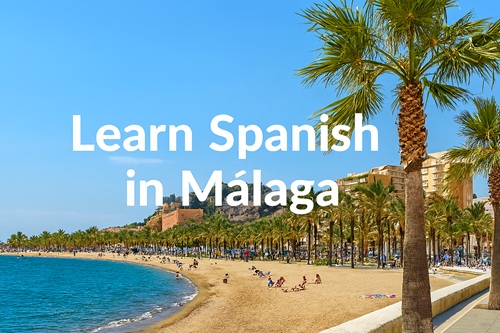
We teach Spanish in small groups in Málaga and Buenos Aires, and online from anywhere.
Learn Spanish in MálagaWhat is the best order to learn things?
- Pronunciation, first week. Spanish is phonetic, so this takes days, not months, and fixing it later is much harder than getting it right now.
- Present tense and the 500 most common words. That combination covers a startling proportion of daily speech.
- Speaking, immediately. Badly. Week one. This is the step people postpone for a year and it is the one that determines the outcome.
- Past tenses. Preterite and imperfect, and the difference between them, which English does not mark.
- Listening at natural speed. Not slowed audio. The gap between textbook Spanish and real speech is the thing that shocks people on arrival.
- The subjunctive. Later than most courses teach it, and easier once you have heard it a thousand times.
Should you learn Spanish from Spain or Latin America?
Whichever you will actually hear. The grammar is shared, speakers understand each other across every border, and no variety is more correct.
The real differences are three: pronunciation, the vosotros form used in Spain and not in Latin America, vos in Argentina and parts of Central America, and everyday vocabulary. None of them will prevent you being understood anywhere. Choose based on where you are going or which accent you enjoy listening to, because you will listen to a great deal of it.
How do you stop translating in your head?
This is the question behind most “what is the best way” searches, and the answer is unglamorous: volume and pressure. Translation is what your brain does when it has time. Remove the time and it stops.
- Speak faster than is comfortable. Accuracy drops, and the translating stops.
- Learn phrases, not words. Retrieving a whole chunk is faster than assembling one.
- Consume more than you can process. Podcasts and television at natural speed train your ear to stop waiting for individual words.
- Put yourself where English is not an option. This is the entire mechanism behind immersion.
What should you stop doing?
- Studying grammar you have never heard used. Learn the rule when you have met the pattern, not before.
- Waiting until you are ready to speak. The readiness never arrives; you talk your way into it.
- Switching methods every month. Most plateaus are normal consolidation and not evidence the method failed.
- Consuming only material made for learners. Graded audio is a bridge, not a destination.
- Measuring progress in streaks. Measure it in conversations survived.
What is the fastest way to learn Spanish?
Intensive immersion in a Spanish-speaking country, in a small group, while living your daily life in Spanish. It is faster than every alternative and the margin is months rather than weeks, because it is the only method that supplies correction and volume at once.
FREE RESOURCES
Free Spanish study pack
Printable study sheets from our teachers, plus one short email a week.
One email, then a short weekly tip. Unsubscribe any time.

If you want to know where you are starting from, our free level test takes minutes. If you want the fast route, that is what we run in Buenos Aires and Málaga.
Frequently asked questions
What is the most effective way to learn Spanish?
Structured teaching combined with immersion. Teaching catches your errors before they set; immersion supplies the volume of use that turns knowledge into speed. Either one alone works, and both together work considerably faster.
Can I teach myself Spanish?
To about A2 comfortably, and to B1 on paper with discipline. The ceiling is correction: you cannot hear your own mistakes, so self-study quietly trains you to repeat them. Add a teacher at the point where you start speaking regularly.
What is the best age to learn Spanish?
Any. Adults learn vocabulary and grammar faster than children because they can use explicit rules and existing language knowledge. Children win on accent. For every practical purpose, adults are at no disadvantage.
How do I learn Spanish quickly?
Speak from week one, learn phrases rather than isolated words, consume Spanish daily at natural speed, and get corrected regularly. If you can take time away, intensive immersion compresses years into months.
Test yourself
Quick quiz
Quick quiz: the best way to learn Spanish
0 of 5 answered