





By Raquel Cobos, School Manager at Vamos Academy Málaga
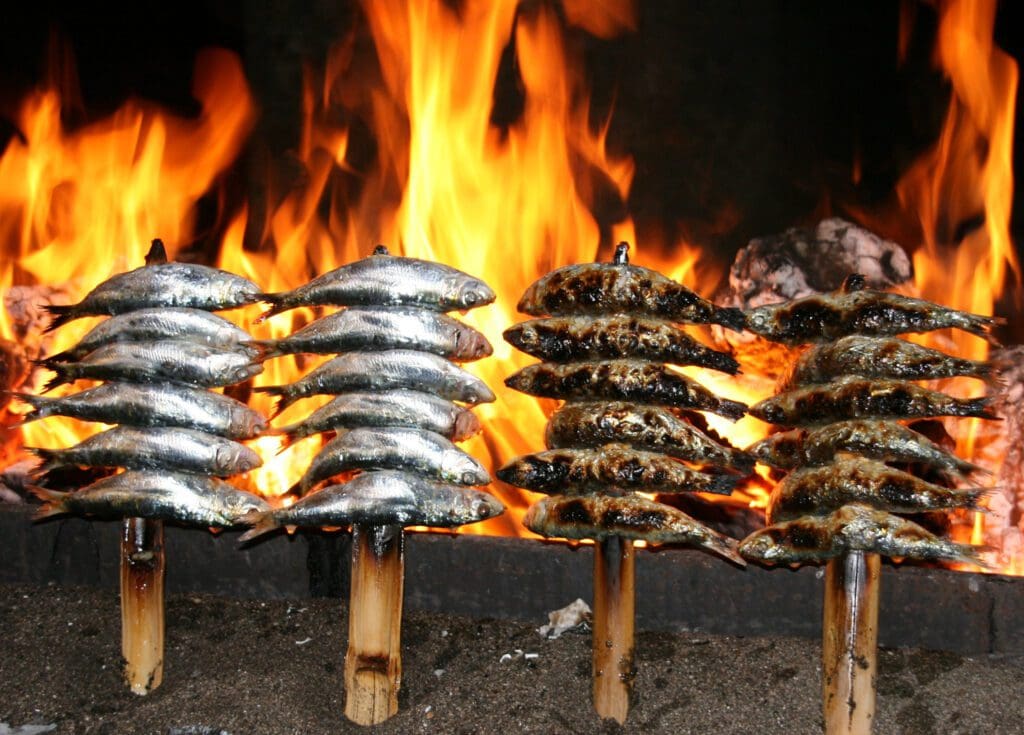
An espeto is Málaga’s signature dish: six fresh sardines threaded onto a sharpened cane skewer, salted, and roasted beside olive-wood embers in an old fishing boat filled with sand, right on the beach. You eat them with your fingers, ideally between May and September when the sardines are at their fattest, and a skewer typically costs around €2.50, €3 at most chiringuitos (2025-2026 season). The best grilled sardines in Málaga come off the boats along the El Palo and Pedregalejo seafront in the east of the city, and on the Misericordia and Huelin beaches to the west.
That is the short answer. Below is everything else worth knowing before you sit down at a plastic table with sand between your toes: how espetos are cooked, when to order them (and when not to), which chiringuitos locals actually go to, and how to eat one without embarrassing yourself, something even a king of Spain once got wrong.
In this article
What Exactly Is an Espeto?
The word comes from the Spanish verb espetar, “to skewer.” In Málaga it means one specific thing: sardine skewers, grilled by the sea, what many visitors simply describe as Málaga’s famous “fish on a stick”. A classic espeto carries six sardines on a single skewer, threaded along the spine so they hold firm over the heat. The only seasoning is coarse sea salt, no oil, no lemon, no herbs. The flavour comes from three places: genuinely fresh fish, olive-wood smoke, and the fat of the sardine itself basting the fish as it renders.
If a summer of espetos has you looking at flats by the beach, read our lawyers’ guide to buying property in Málaga as a foreigner first.
The cook is called an espetero, and it is a real trade. A good espetero judges the wind, the embers and the fat of each batch of fish by eye. There are few of them left, which is one reason Málaga has been pushing since 2017, with the backing of the Andalusian Parliament and chefs like Dani García, to have the espeto recognised as UNESCO Intangible Cultural Heritage. As of 2025 the candidacy is still active but not yet inscribed.
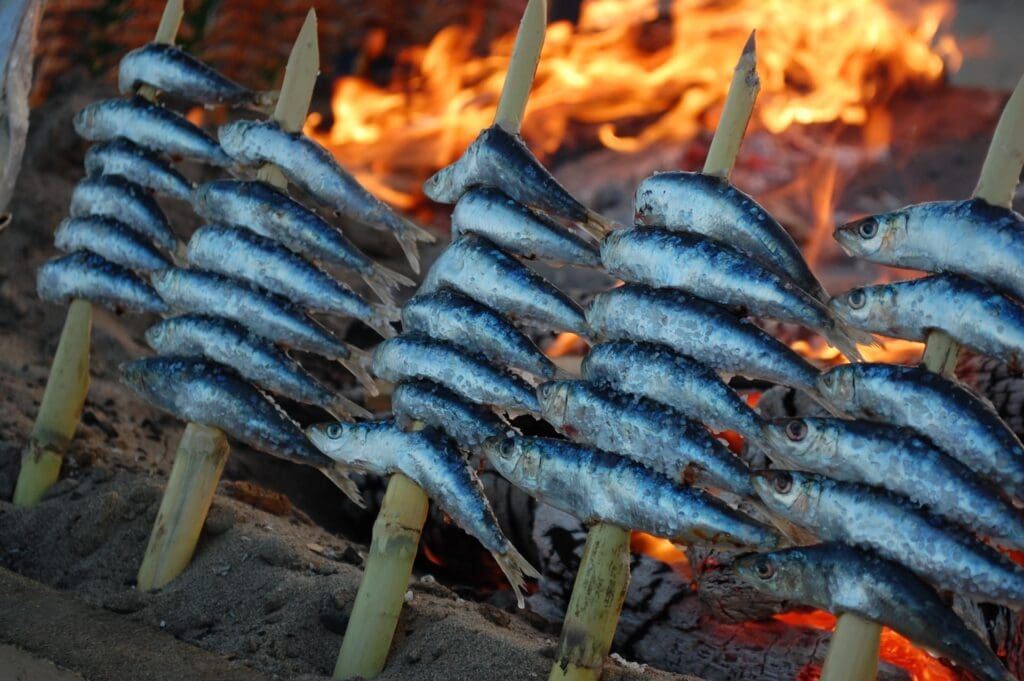
Although sardines are the espeto, Málaga’s grilled fish tradition does not stop there: you will also see squid, sea bream, sea bass and even octopus cooked espetado at the same boats. They are good, but if it is your first time, order the sardines. That is the dish the whole tradition is built on.
Here is how the boat’s usual offerings compare, so you know what you are committing to before the espetero shouts your order back:
| Espeto | Typical price (2025 menus) | What arrives | Order it when |
|---|---|---|---|
| Sardinas | €2, €4 | Five to eight whole sardines on one cane, salt only | Always. This is the original, at its best May-September |
| Calamar | Roughly €9, €27 depending on size | A whole squid, charred outside, tender inside | You want something meatier, or it is winter and the sardines are lean |
| Dorada / lubina | Around €23 for a whole fish | Sea bream or sea bass, enough for a full lunch | A skewer alone will not do, or you are sharing |
| Pulpo | Varies, often priced by weight | A smoky grilled octopus tentacle | Second round, once the sardines are gone |
Prices are from 2025 Pedregalejo menus (El Merlo, La Concha) and move with the day’s catch.
When Is Sardine Season in Málaga?
Malagueños have a rule for this: eat sardines only in the months without an “r”, mayo, junio, julio, agosto (May, June, July, August). That is when Mediterranean sardines carry the most fat, which is exactly what you want on a grill. In practice the season runs roughly May to early October, and most chiringuitos serve espetos year-round for visitors, but a winter sardine is a leaner, drier thing. If you are in Málaga in July, you are here at the perfect moment.
One local habit worth copying: espetos are a lunchtime dish. The classic plan is a morning at the beach, espetos and a cold drink at two or three in the afternoon, and a long slow rest afterwards. Ordering them at night is not wrong, but midday by the water is how the dish was meant to be eaten.
Eating your way through Málaga while you learn Spanish? Ordering an espeto “con los deos” tastes better when you can chat with the espetero. Our Málaga school teaches small groups, with group courses from €200 per week, join a class and practise your Spanish where it counts.
“I took a four-week course at Vamos and was delighted with the experience. The course is conversation-intensive, which was incredibly useful given that speaking tends to be the most difficult skill.”
Vamos Academy student review
Where to Eat the Best Espetos in Málaga?
The honest local answer: go east. The fishing neighbourhoods of Pedregalejo and El Palo, a 20-minute bus ride from the centre, have the highest density of espeto boats in the city and the sharpest prices, several chiringuitos there still advertise sardine espetos for €2.50, €3 (2025), some as low as €2. The best-known holdout is El Merlo in Pedregalejo, which still charges the €2 it did a decade ago and gets through more than 800 espetos a day in high summer (2025), expect a queue. Competition keeps everyone honest: the Costa del Sol counts roughly 300 chiringuitos along its 160 km of coastline, about one every 500 metres. The western city beaches of La Misericordia and Huelin are the other classic espeto territory, quieter and very much a locals’ scene. Wherever you go, look for an actual boat with embers and an espetero working it, if the sardines come out of a kitchen, walk on.
FREE RESOURCES
Free Spanish study pack
Printable study sheets from our teachers, plus one short email a week.
One email, then a short weekly tip. Unsubscribe any time.

| Chiringuito | Where | Why go |
|---|---|---|
| El Tintero | Playa del Dedo, El Palo | Famous auction-style service: waiters walk out shouting the dishes and you flag down what you want. Chaotic, loud, great fun. |
| El Cachalote | Pedregalejo seafront | Old-school beach bar on the prettiest stretch of Pedregalejo’s small coves. |
| Restaurante Botavara | Pedregalejo seafront | A favourite with local families; reliable espetos and good fried fish. |
| Chiringuito Rocamar | El Palo-Pedregalejo strip | Solid traditional espetos on the same eastern seafront walk. |
| Casa Kiko | Rincón de la Victoria (east of the city) | Worth the short trip along the coast; espetos with a proper seaside-town feel. |
| Beach bars of La Misericordia & Huelin | Western Málaga | No single famous name, a row of unpretentious chiringuitos where the clientele is almost entirely malagueño. |
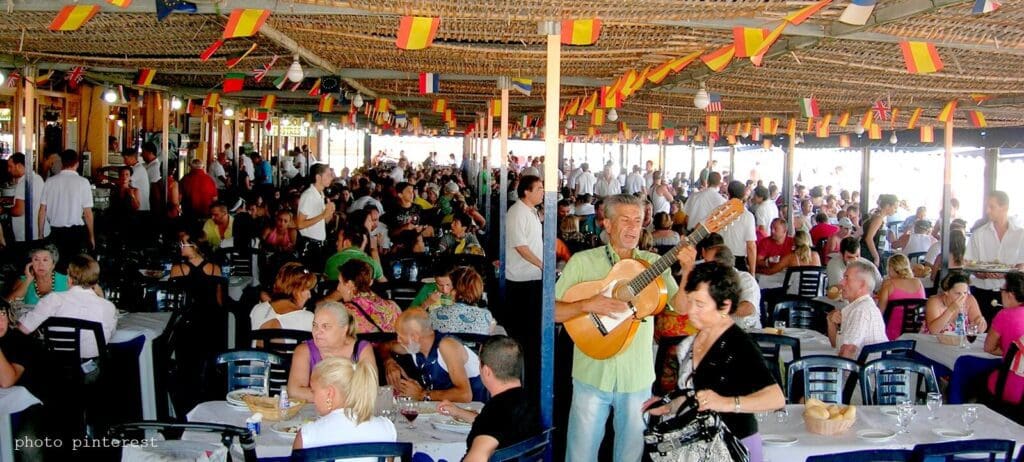
If you want to build a whole day around it, Pedregalejo’s beaches are among the most beautiful beaches in Málaga, and Rincón de la Victoria pairs well with a lazy afternoon exploring the Costa del Sol’s best beaches. And if espetos leave you hungry for more of the city’s food scene, we have a separate guide to the 10 best restaurants in Málaga.
How Are Espetos Cooked?
The grill is the most photogenic part of the tradition: a retired fishing boat (the barca espetera) filled with sand, with a fire of olive wood burning in it. The espetero drives each cane skewer into the sand at an angle beside the embers, never directly over the flames. The sardines roast in radiant heat, the fat drips and flares, and the skin crisps under its crust of salt without burning.
The detail most visitors miss is the wind. Espeteros constantly reposition the skewers, and sometimes the whole boat, against the breeze, so that flames are pushed away from the fish and the smoke rolls over it instead. Cooking takes only a few minutes per side. When the eyes turn white and the skin blisters, they are done.
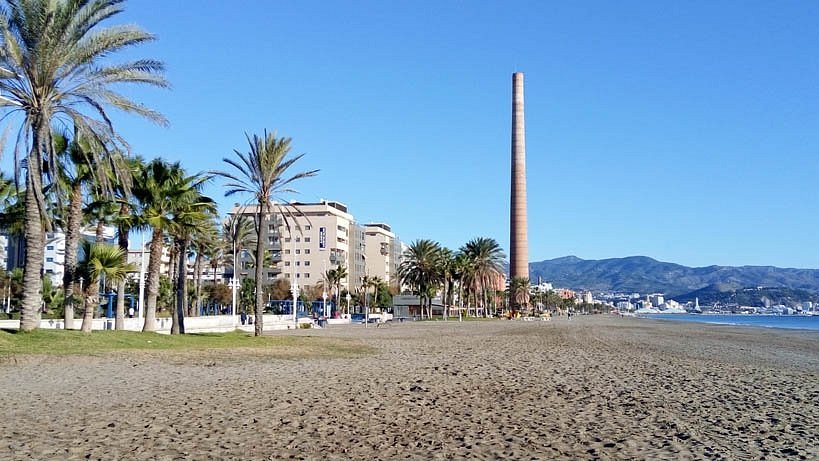
The technique is old, and it is what separates Málaga’s espetos from grilled sardines anywhere else in Spain. Locals will tell you fish has been grilled on this shore since the Phoenicians founded Málaga almost three thousand years ago, and the direct ancestor of today’s espeto is the moraga: the night-time beach roast where fishermen cooked part of the day’s catch over driftwood fires, boats pulled up on the sand beside them. The chiringuitos of El Palo and Pedregalejo grew straight out of that world in the late 19th century.
Watch an espetero at work here:
How Do You Eat an Espeto? (Yes, With Your Fingers)
With your hands, straight off the skewer. Pinch the fish behind the head, lift the fillet off the spine with your fingers or your teeth, flip, repeat. Head and backbone stay on the plate. Purists skip the lemon: a summer sardine has enough flavour on its own.
Málaga has a story it loves to tell about this. In 1885, King Alfonso XII stopped at a beach stall in El Palo run by Miguel Martínez Soler, “Migue el de las sardinas.” When the king reached for cutlery, Migue corrected him: sardines are eaten con los deos: “with your fingers,” in the thickest Málaga accent. The king obliged, and the phrase became part of local folklore. If a waiter says it to you, take it as a friendly order.
What to have alongside? Keep it simple, like the locals do:
- Tinto de verano: red wine over ice with fizzy lemon. The default chiringuito drink, lighter than sangría. A very cold beer is the other correct answer.
- Ensalada mixta: crisp lettuce, tomato, onion, olive oil and vinegar to cut the richness of the fish.
- Pan con tomate or a portion of patatas alioli if you are sharing a table.
- Still hungry afterwards? Follow the locals to a plate of croquetas, Spain’s great comfort food.
Can You Make Espetos at Home?
You can get close, even without a boat full of sand. What you need: the freshest whole sardines you can find, coarse sea salt, and long bamboo skewers or reeds. Olive wood on a charcoal grill gets you nearest to the real flavour; a plain charcoal or gas grill still works.
- Scale and gut the sardines but leave heads and spines intact; rinse and pat dry.
- Thread up to six sardines per skewer along the spine, entering at the mouth and exiting near the tail.
- Salt generously: more than feels reasonable. Much of it falls away during cooking.
- Angle the skewers beside the coals rather than laying them flat over direct heat, and cook about 5-7 minutes per side, until the skin blisters and the flesh lifts easily from the bone.
- Serve immediately, off the skewer, with nothing but a summer evening.
It will not taste exactly like Pedregalejo, half of an espeto is the sea air and the sound of the espetero shouting orders, but it is a very good Sunday.
Frequently Asked Questions About Espetos
What is an espeto?
An espeto is Málaga’s traditional dish of fresh sardines, usually six, skewered on a cane, salted, and grilled beside olive-wood embers in a sand-filled boat on the beach. The name comes from espetar, “to skewer.”
When is the best time to eat espetos in Málaga?
May to September, when Mediterranean sardines are at their fattest. Locals follow the rule of eating sardines only in months without an “r” in Spanish: May, June, July and August. Many chiringuitos serve them year-round, but summer sardines are noticeably better.
How much does an espeto cost in Málaga?
In 2025, a sardine espeto typically costs €2.50, €3 at beachfront chiringuitos, with some in Pedregalejo and El Palo advertising them for as little as €2. Espetos of squid, sea bream or sea bass cost more.
Where do locals eat espetos in Málaga?
The El Palo and Pedregalejo seafront in eastern Málaga is the heartland (El Tintero, El Cachalote, Botavara and Rocamar are classics), along with the chiringuitos of La Misericordia and Huelin beaches west of the centre, and Casa Kiko in Rincón de la Victoria.
Do you eat espetos with a fork?
No, with your fingers, straight off the skewer, leaving the head and spine on the plate. Even King Alfonso XII was told in 1885 to eat his sardines “con los deos” (with his fingers) by the El Palo stallholder who served him.
Are espetos always sardines?
The classic espeto is sardines, but chiringuitos also grill squid, sea bream, sea bass and octopus on skewers at the same boats. If it is your first espeto, start with the sardines: that is the original dish.
Are espetos healthy?
Very. Sardines are among the richest everyday fish in omega-3s, around 1.5 g of EPA and DHA per 100 g, along with over 20 g of protein and a large dose of vitamin B12. And since an espeto is grilled with nothing added but salt, this is about as clean as cooked fish gets.
Why are sardines cooked in a boat in Málaga?
The sand-filled boat, the barca espetera, is a leftover from the moraga, the fishermen’s night-time beach roast: the boats were already pulled up on the sand, and a hull full of sand made a safe, wind-sheltered fire pit. Today the boats are retired vessels kept just for the grill, and espeteros still turn them, and the skewers, against the breeze so the smoke, not the flame, reaches the fish.
What do you drink with an espeto?
Tinto de verano, red wine over ice with fizzy lemon, or a very cold beer are the two local answers. Most tables add an ensalada mixta and bread to cut the richness of the fish, and purists skip the lemon wedge on the sardines themselves. Order everything at once; espetos come off the boat fast.
Want more than a taste of Málaga? Learn to order your espetos in Spanish. Vamos Academy runs small-group Spanish courses in Málaga from €200 per week, plus DELE and SIELE exam preparation. Come study with us by the Mediterranean.