Retirement Visa Spain 2026: Requirements & Cost
Retire in Spain on a pension, savings, or investment income, without working locally. Here is how the non-lucrative visa works for retirees, the 2026 income table, healthcare options, tax residency, and our fixed legal fee, from a Malaga-based abogada colegiada.
- Abogada colegiada
- Since 2009
- English + Spanish
- Malaga office
Planning your retirement on the Costa del Sol?
We check your pension or savings against the 2026 thresholds, build your document file, file with your consulate, and carry you through to your TIE card in Malaga, for one fixed fee.
Free 10-min callSpain has no separate “retirement visa”: retirees use the non-lucrative visa, which lets you live in Spain without working if you can show recurring income or savings of about 28,800 EUR for the main applicant in 2026, plus about 7,200 EUR per additional family member. A state pension, private pension, or investment income all qualify. Healthcare is via private insurance before residency and, for many EU and agreement-country pensioners, the public system afterward. Our fixed fee is 950 EUR for the main applicant plus 250 EUR per family member.
Retiring in Spain: why the non-lucrative visa is the retiree’s route
Spain has no visa category called a “retirement visa.” What retirees actually use is the non-lucrative visa, the NLV, a no-work residence permit built entirely around proof of financial means. It was not designed exclusively for retirees, but in practice it is the door almost every retiree walks through, because a pension, savings pot, or investment income is exactly the kind of recurring, documentable means the NLV asks for.
It fits people drawing a state or private pension, whether from the US, UK, Canada, or elsewhere, people living off savings or rental income back home, and couples retiring together where one or both partners are no longer working. What it does not do is grant you the right to take a local job or register as autonomo; the trade-off for a straightforward, income-based path to residency is that you genuinely stop working once you are here, aside from a narrow allowance for minor incidental remote income.

Rule of thumb: if your pension or savings keep paying out whether or not you work, the NLV is the right visa for your retirement. If you still plan to earn active income once here, look at the digital nomad visa or a work-based route instead.
2026 pension and savings proof, with the numbers shown
The NLV income test is built on the IPREM, a public income index Spain uses to set thresholds across several programs. The main applicant must show 400% of the annual IPREM, and each additional family member, typically a spouse, must show 100% of the annual IPREM. Renewal after the first year covers a two-year period, so the figures roughly double.
| Applicant | Requirement | Approx. 2026 annual figure | Approx. monthly equivalent |
|---|---|---|---|
| Main applicant | 400% of annual IPREM | €28,800 | €2,400/month |
| Retiring spouse or partner | 100% of annual IPREM | €7,200 | €600/month |
| First renewal (main applicant, 2 years) | Double the first-year figure | €57,600 | €2,400/month average |
A state pension, private pension, or a mix of pension and investment income all qualify, as long as it is recurring and properly documented, typically with award letters, bank statements, or investment account statements covering the last 6 to 12 months. US Social Security and UK State Pension statements both work well here, since they show a clear, ongoing, officially issued benefit amount. A couple retiring together should budget for roughly 36,000 EUR in demonstrable annual means for the first year.
Healthcare for retirees
Healthcare is one of the first questions every retiree asks, and the honest answer has two stages. Before your visa is granted, you need a private health insurance policy with full coverage in Spain, no copayments, and no waiting periods; this is a hard document requirement at the consulate stage regardless of your age or health.
Once you are resident, your longer-term options depend on where your pension comes from. Retirees already drawing a state pension from an EU country, or from a country with a bilateral healthcare agreement with Spain, can often access Spain’s public healthcare system through an S1 form or equivalent, transferring their existing entitlement rather than starting from zero. Retirees without that entitlement, including most Americans and Canadians, generally continue on private insurance, or opt into the convenio especial, a public system buy-in available to residents for a modest monthly fee. We map out the realistic healthcare path for your specific pension source before you commit to a policy.

Document checklist
- Valid passport with at least one year of remaining validity
- Completed national visa application form (EX-01), signed
- Pension award letters, bank statements, or investment statements for the last 6 to 12 months, meeting the IPREM thresholds above
- Private health insurance policy with full coverage in Spain, no copayments, no waiting periods
- Criminal record certificate from every country you have lived in for the last 5 years, apostilled and translated
- Medical certificate confirming you carry no disease with serious public health implications
- Passport-sized photographs meeting Spanish visa specifications
- Proof of accommodation in Spain, required by some consulates
- Visa application fee payment receipt
- For an accompanying spouse: marriage certificate, apostilled and translated, plus their own proof of means and health insurance
Process and realistic timeline
The application starts abroad, at the Spanish consulate with jurisdiction over your current place of residence. Document preparation, including apostilles and sworn translations of pension letters and civil documents, typically takes 3 to 6 weeks. Standard consulate processing is up to 3 months once submitted, and once your visa is issued you generally have 90 days to enter Spain and must then apply for your TIE card within 30 days of arrival. All in, a realistic timeline from starting paperwork to holding a physical TIE card is 4 to 8 months.
Tax residency once you retire in Spain
Spend more than 183 days a year in Spain and you become a Spanish tax resident, taxed on your worldwide income, foreign pensions included, at ordinary progressive rates rather than a flat expat rate. The Beckham Law does not apply here, since it is built for people relocating for employment, not retirement. A double taxation treaty between Spain and your home country usually prevents the same pension being taxed twice, but the exact mechanics, and which country gets first taxing rights on which type of pension, vary by treaty and pension type. Non-resident owners of Spanish property who have not yet moved should also budget for annual Modelo 210 filings. See our Tax Residency (183-day rule) and Non-Resident Tax (Modelo 210) pages for the detail, and our Inheritance Tax guide if estate planning is part of your retirement decision.
Common refusal reasons, and our appeal option
Most retirement-route refusals we review trace back to a small set of issues: pension or savings evidence that is inconsistent or undocumented, a health insurance policy with copayments or waiting periods, or missing or improperly apostilled civil and criminal record documents. If your application is refused, a recurso de reposicion is an administrative appeal filed within one month of notification, and a contencioso-administrativo appeal goes to court within two months. Most consular refusals we see are winnable on appeal once the underlying paperwork issue is corrected. See our Visa Denied? Appeal page for the full process.
Retiring in Malaga
Your NLV application is filed abroad, but everything after your visa is issued happens here: entering Spain, settling into the province, and completing your TIE card at the local Oficina de Extranjeros or comisaria covering your address. Malaga’s Extranjeria appointment system runs on cita previa, and we handle the booking, prepare your fingerprinting file, and accompany you to it when you want us there.
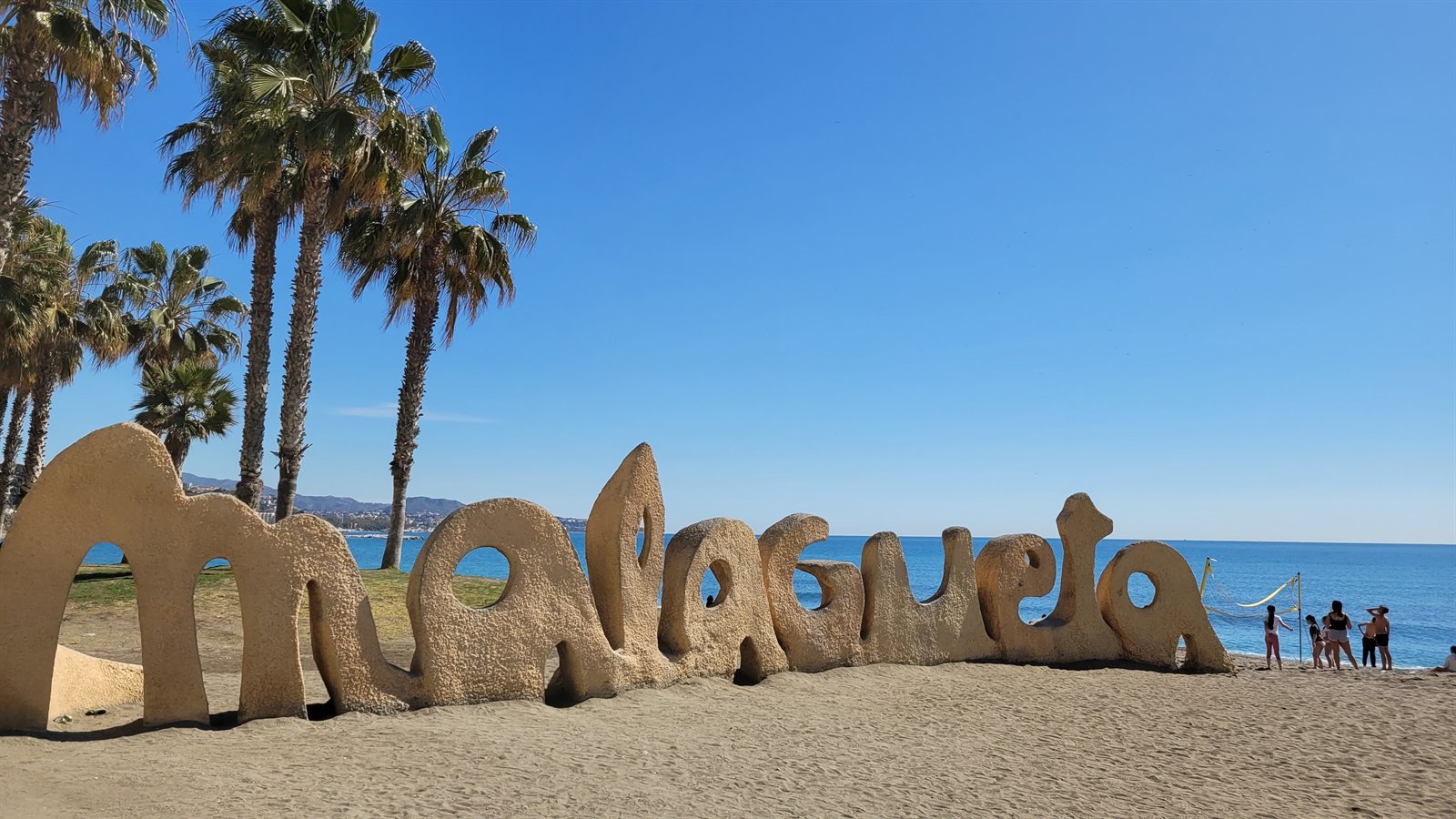
Malaga’s appeal for retirees is straightforward: a genuinely mild climate almost year-round, direct flights to most of Europe and several US gateway cities, a well-regarded public and private hospital network, and an established international community around the coast and city centre. Day-to-day living costs generally run below major cities in the US, UK, or northern Europe, though coastal property has become considerably more expensive in recent years. We also coordinate your empadronamiento at the relevant Malaga town hall once you have somewhere to live, since it feeds into your health card and later renewal file. If you are choosing between neighbourhoods, our Moving to Malaga guide and Immigration Lawyer Malaga pages cover the practical side alongside the legal one.
Retirement visa fees, fixed and published
One flat professional fee per file. Government fees, consular fees, apostilles, sworn translations, and the TIE card tax are paid separately, at cost, directly to the relevant authority or provider.
| Service | What’s included | Fixed fee |
|---|---|---|
| Retirement visa (NLV), main applicantEligibility check through TIE guidance | Pension and savings review against 2026 thresholds, full document checklist, consulate filing support, entry, TIE and empadronamiento guidance in Malaga | €950 |
| Retiring spouse or family memberFiled alongside the main applicant | Means review, document review, filing support for each spouse, partner, or dependent added to the file | +€250 each |
| Renewal (after year 1)Two-year renewal cycle | Document refresh, updated means verification, renewal filing and TIE renewal | €300 |
Government fees are separate and small: the national visa tasa runs roughly €80-€120 depending on your consulate, and the TIE card fee is currently €16.08-€19.30. Apostilles, sworn translations, and health insurance premiums are paid to their respective providers. We quote the full third-party cost breakdown on your free call before anything is booked.
Three steps, start to finish
Free 10-min call
We check whether your pension or savings meet the 2026 thresholds and confirm the retirement route is right for you, no obligation.
Fixed quote + document list
You get one flat fee and a checklist built for your specific consulate, so nothing is missing when you file.
We file and track to approval
We submit at the consulate, guide your arrival, and carry you through to your TIE card in Malaga, keeping you posted in English or Spanish.
Retirement visa questions, answered
Which visa do retirees use to move to Spain?
Almost all retirees use the non-lucrative visa, since Spain has no separate legal category called a retirement visa. The NLV is a no-work residence permit built around proof of recurring income or savings, which fits a pension or investment-funded retirement precisely.
What pension or savings proof do I need to retire in Spain in 2026?
The main applicant must show recurring income or savings of about 28,800 EUR for the first year, which is 400% of the annual IPREM. Each additional family member, such as a spouse, adds about 7,200 EUR. A state pension, private pension, or investment income all count, as long as they are documented with award letters or account statements covering the last 6 to 12 months.
Can I use my US Social Security or UK State Pension as proof of income?
Yes. Both count as recurring income for the non-lucrative visa, provided you supply an official award letter or benefit statement showing the amount and that it is ongoing. We help translate and present these in the format consulates expect.
What healthcare will I have access to as a retiree in Spain?
Before your visa is granted you need private health insurance with full coverage and no copayments. Once resident, some retirees, particularly those already drawing a state pension from an EU or agreement country, can access Spain’s public healthcare system via an S1 form or bilateral agreement. Others remain on private insurance or pay into the convenio especial, a public system buy-in available to residents.
Do I have to pay Spanish tax on my foreign pension once I retire here?
Once you spend more than 183 days a year in Spain you become a Spanish tax resident, taxed on worldwide income, foreign pensions included, at ordinary progressive rates. A double taxation treaty between Spain and your home country usually prevents being taxed twice on the same pension, but the mechanics vary by country and pension type.
Can my spouse retire with me on the same visa?
Yes. A spouse or partner can apply alongside the main applicant, adding their own proof of means equal to 100% of the annual IPREM and their own set of apostilled, translated civil documents.
How long does the retirement visa application take?
Budget four to eight months from first gathering documents to holding your TIE card. Consulate processing is officially up to three months, appointment availability adds weeks, and the TIE stage in Spain adds four to eight more weeks depending on your local Extranjeria office.
Can I buy property in Spain before or during my retirement visa application?
Yes, buying property is not required for the non-lucrative visa and does not speed up the process, but many retirees do buy once their visa is approved. Owning your home in Spain does not replace the accommodation or proof-of-means requirements during the application itself.
How much does it cost to retire in Malaga compared to my home country?
Malaga generally runs lower than major cities in the US, UK, or northern Europe for day-to-day costs such as groceries, dining, and healthcare, though property prices in central and coastal areas have risen substantially in recent years. Your actual budget depends heavily on neighbourhood and lifestyle, and we can point you to current cost-of-living data during your free call.
What happens if my retirement visa is refused?
You can file a recurso de reposicion, an administrative appeal, within one month of notification, or go directly to a contencioso-administrativo court appeal within two months. Most refusals trace back to inconsistent income documentation or health insurance with copayments, both of which are usually fixable before you refile.
Can I renew my retirement visa indefinitely?
The visa renews twice, first for two years, then for a further two years, bringing you to five years of continuous legal residence. At that point you become eligible for permanent (larga duracion) residency, which removes the need for further renewals tied to income thresholds.
Do I need to register on the padron (empadronamiento) once I retire in Malaga?
Yes. Once you have a fixed address you should register at your local town hall. Empadronamiento feeds into your health card, some healthcare access routes, and later renewal files, so we schedule it in your first weeks after arrival.
You might also need
Let’s talk through your situation
Tell us where you’re at, we’ll tell you what it takes, in plain English or Spanish. No obligation.
No obligation. English, Spanish.
- Response time
- Within 24 hours
- Call length
- 10 minutes, free
- Languages
- English and Spanish
- Location
- Calle Reding 6, Malaga, or video call